

Selecting effective emergency communication equipment can feel overwhelming when your team’s safety depends on getting it right. Managers and safety officers in construction, healthcare, and security face dozens of device options, conflicting specifications, and pressure to balance reliability with budget constraints. This article cuts through the complexity by presenting a practical equipment list, clear selection criteria, and expert comparisons to help you choose devices that genuinely protect your workforce in critical situations. You’ll gain a structured framework to evaluate options and make confident purchasing decisions for 2026.
Table of Contents
- Criteria For Choosing Emergency Communication Equipment
- Essential Items In The Emergency Communication Equipment List
- Comparing Top Emergency Communication Devices In 2026
- Situational Recommendations For Emergency Communication Equipment
- Explore Our Expert Emergency Communication Solutions
- Frequently Asked Questions About Emergency Communication Equipment
Key takeaways
| Point | Details |
|---|---|
| Selection criteria matter | Reliability, coverage area, durability, ease of use, and integration capabilities determine equipment effectiveness in emergencies. |
| Two-way radios are central | These devices provide instant voice communication across varied environments and form the backbone of most emergency response systems. |
| Device comparison informs choice | Evaluating features, pros, cons, and industry suitability of top models helps match equipment to specific operational needs. |
| Hiring versus owning impacts cost | Short-term events and temporary projects often benefit from hiring equipment whilst ongoing operations justify purchase. |
Criteria for choosing emergency communication equipment
Before you browse product catalogues or request quotes, establish clear benchmarks that separate adequate equipment from genuinely reliable tools. Effective emergency communication depends on reliability, coverage, and ease of use because failures during critical moments create dangerous gaps in coordination. Your selection criteria should reflect the specific hazards and operational demands your teams face daily.
Reliability stands as the non-negotiable foundation. Devices must deliver clear audio transmission regardless of weather conditions, physical obstructions, or electromagnetic interference common in industrial settings. Coverage area determines whether your equipment maintains strong signals across sprawling construction sites, multi-floor hospitals, or outdoor event venues. Durability matters because emergency equipment faces drops, moisture exposure, and temperature extremes that would destroy consumer-grade alternatives.
Ease of use becomes critical when stressed personnel need to activate emergency protocols within seconds. Intuitive controls, clearly labelled buttons, and simple channel selection prevent fumbling during high-pressure situations. Integration capabilities allow new devices to work seamlessly with existing communication infrastructure, avoiding costly system overhauls. Power considerations encompass battery life for extended shifts and charging options that maintain continuous availability across multiple devices.
Cost evaluation extends beyond purchase price to include maintenance expenses, accessory requirements, and potential hiring arrangements. Consider these essential criteria:
- Signal strength across your operational area without dead zones
- Rugged construction meeting IP67 or higher ingress protection ratings
- Battery performance supporting full work shifts plus emergency reserves
- Compatibility with existing communication platforms and accessories
- Training requirements for staff to operate devices effectively
- Warranty coverage and local repair service availability
Pro Tip: Test equipment in your actual work environment before committing to large orders, as manufacturer specifications don’t always reflect real-world performance in your specific setting.
Essential items in the emergency communication equipment list
Your emergency communication toolkit should combine primary devices for instant coordination with backup systems that maintain contact when primary channels fail. Two-way radios are core equipment widely used in construction, healthcare, and security for instant, reliable communication because they function independently of mobile networks and deliver immediate voice transmission across teams. Handheld models suit mobile workers whilst vehicle-mounted units provide higher power output for extended range.
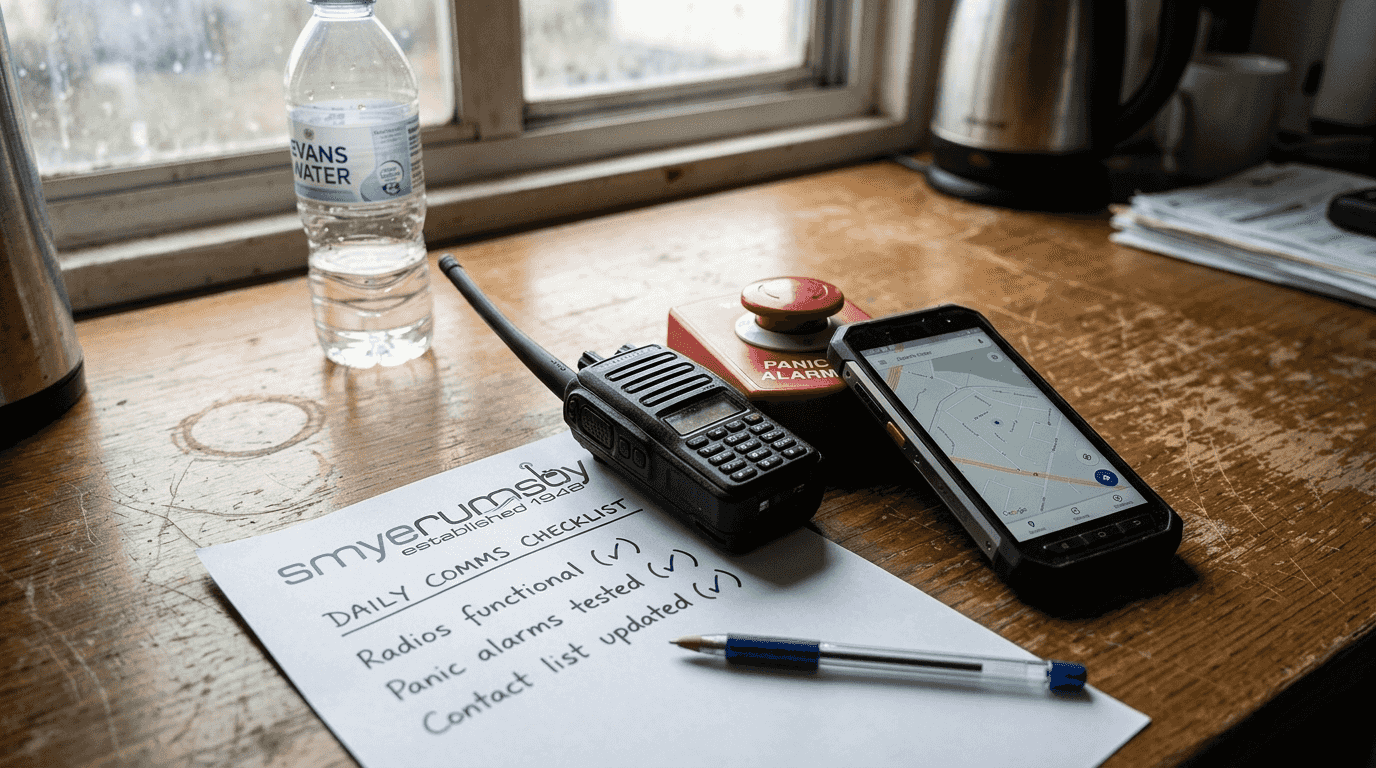
Emergency call buttons integrated into radio bodies or worn as separate panic alarms enable personnel to broadcast distress signals with a single press. These devices typically transmit location data and activate recording features automatically. Mobile phones equipped with dedicated emergency applications serve as secondary communication tools, particularly useful when coordinating with external emergency services or accessing building plans and hazard information.
Satellite phones become essential for remote locations where cellular coverage proves unreliable or non-existent. Construction sites in rural areas, offshore facilities, and wilderness event venues require this backup capability. Public address systems allow mass communication during evacuations, broadcasting clear instructions to large groups simultaneously across multiple zones.
Signal boosters extend communication range in structurally complex sites where concrete, steel, and underground areas create radio shadows. These devices amplify weak signals and fill coverage gaps without requiring additional radios. Your complete equipment inventory should include:
- Handheld two-way radios with emergency alert functions
- Vehicle-mounted mobile radios for site perimeter coverage
- Panic buttons or man-down alarm devices
- Charging stations supporting simultaneous multi-device charging
- Spare battery packs enabling hot-swapping during extended operations
- Headsets and earpieces for hands-free operation in noisy environments
- Protective cases and holsters preventing damage during active use
- Signal repeaters boosting coverage in large or obstructed areas
Pro Tip: Standardise on one or two equipment brands across your organisation to simplify training, reduce spare parts inventory, and ensure accessory compatibility between devices.
Comparing top emergency communication devices in 2026
Understanding how leading models stack up against each other transforms vague product descriptions into actionable purchasing intelligence. Different two-way radio models offer varying levels of durability, range, and ease of integration depending on their intended applications and price points. The Motorola R2 delivers rugged reliability for demanding environments with its IP68 rating, 12-hour battery life, and simple channel controls that minimise user error during emergencies.
The Motorola R5 steps up with digital capabilities including GPS tracking, text messaging, and enhanced audio clarity through noise cancellation technology. This model suits operations requiring location monitoring and multi-mode communication beyond basic voice transmission. Hytera Multi-Mode radios bridge analogue and digital networks, allowing gradual system upgrades without replacing entire fleets simultaneously.
| Device | Range | Battery Life | Key Features | Best For | Limitations |
| Motorola R2 | 5km open / 1.5km urban | 12 hours | IP68 rating, emergency button, simple controls | Construction sites, outdoor events | Analogue only, no GPS |
| Motorola R5 | 8km open / 2km urban | 16 hours | Digital, GPS tracking, text messaging, noise cancellation | Healthcare facilities, security teams | Higher cost, requires training |
| Hytera Multi-Mode | 6km open / 1.8km urban | 14 hours | Analogue and digital compatibility, encryption | Mixed fleet environments, gradual upgrades | Complex setup, premium pricing |
Evaluate these models against your specific operational requirements:
- Construction environments prioritise durability and battery longevity over advanced digital features
- Healthcare settings value discreet communication through earpieces and quiet alert tones
- Security operations require encryption capabilities and GPS tracking for personnel monitoring
- Event management benefits from simple controls that temporary staff can master quickly
The Motorola R2 excels in straightforward voice communication scenarios where ruggedness and reliability outweigh digital sophistication. Its intuitive operation suits teams with high staff turnover or minimal training time. The R5 justifies its premium through advanced features that enhance coordination in complex operations requiring location awareness and silent messaging capabilities.
Situational recommendations for emergency communication equipment
Matching equipment to your industry context and operational scale prevents both overspending on unnecessary features and underinvesting in critical capabilities. Construction sites demand two-way radios with exceptional durability ratings, extended battery performance supporting 12-hour shifts, and loud audio output cutting through machinery noise. The Motorola R2 meets these requirements whilst keeping costs manageable for large team deployments.
Healthcare facilities require devices with clear audio transmission, discreet earpiece compatibility, and hygiene-friendly smooth surfaces that withstand frequent cleaning with harsh disinfectants. Digital models offering text messaging prevent audible disruptions in patient care areas whilst maintaining rapid emergency response capabilities. Security personnel benefit most from encrypted communication, preventing eavesdropping, GPS tracking for lone worker monitoring, and robust accessories including covert earpieces for plainclothes operations.
Hiring radios can be cost-effective for temporary needs, whilst permanent purchase suits ongoing demand because short-term events and seasonal projects avoid the capital expenditure and maintenance responsibilities of ownership. Consider hiring when:
- Your project duration spans less than six months
- Equipment requirements fluctuate significantly between busy and quiet periods
- Testing different models before committing to a large purchase
- Budget constraints limit upfront capital availability
- Maintenance and repair services are included in hiring agreements
Permanent purchase makes financial sense for established operations with consistent communication needs and the infrastructure to manage equipment maintenance. Develop maintenance routines including weekly battery checks, monthly cleaning protocols, and quarterly professional servicing to maximise device lifespan and reliability. Staff training should cover basic operation, emergency procedures, battery management, and troubleshooting common issues before technical support becomes necessary.
Pro Tip: Create equipment accountability systems, assigning specific devices to individual users, as personal responsibility dramatically reduces loss rates and encourages proper care compared to shared pool arrangements.
Explore our expert emergency communication solutions
Smye-Rumsby brings over 75 years of experience helping organisations across the South East of England implement reliable emergency communication systems tailored to their specific safety requirements. Whether you need guidance on hiring versus purchasing two-way radios or want to explore the proven capabilities of Motorola R2 radios for your construction, healthcare, or security teams, our specialists provide practical advice grounded in real-world applications. We offer professional installation, ongoing maintenance, and comprehensive training ensuring your equipment delivers maximum value when emergencies demand flawless performance. Discover how our professional two-way radio solutions enhance workplace safety and operational coordination.
Frequently asked questions about emergency communication equipment
What is the most critical feature to look for in emergency communication equipment?
Reliability under adverse conditions trumps all other features because equipment that fails during actual emergencies provides no value regardless of its advanced capabilities. Prioritise devices with proven durability ratings, strong signal performance in your specific environment, and simple operation that stressed personnel can execute flawlessly. Battery life supporting extended emergency scenarios without recharging comes second in importance.
Can I integrate two-way radios with mobile phones or other systems?
Modern digital two-way radios support integration with mobile phone networks, dispatch software, and building management systems through gateway devices and compatible applications. This connectivity allows radio users to communicate with mobile phone users and enables centralised monitoring of radio traffic. Analogue radios offer limited integration options, making digital models preferable when system connectivity matters for your operations.
How often should emergency communication devices be maintained or tested?
Conduct basic functionality tests weekly, checking battery performance, audio clarity, and emergency button operation to catch issues before critical situations arise. Professional servicing should occur quarterly for heavily used equipment or annually for devices in lighter rotation. Replace batteries showing diminished capacity immediately rather than waiting for complete failure, as degraded batteries often fail unpredictably during extended emergency use.
Is hiring radios more cost-effective than purchasing for short-term use?
Hiring proves more economical for projects lasting less than six months or events requiring temporary capacity increases beyond your permanent fleet size. Hiring eliminates maintenance responsibilities, provides access to newer equipment models, and converts fixed capital costs into manageable operational expenses. Purchase becomes cost-effective when equipment will see continuous use exceeding 18 months, as ownership costs drop below cumulative hiring fees over longer timeframes.
What accessories improve the effectiveness of two-way radio communication?
Earpieces and headsets enable hands-free operation, critical for personnel performing physical tasks whilst maintaining communication links. Spare battery packs allow hot-swapping during extended shifts without communication interruptions. Speaker microphones improve audio clarity in noisy environments, and position controls are more accessibly than radio-mounted buttons. Protective cases extend device lifespan in harsh conditions, whilst belt clips and holsters prevent drops during active movement.