

Workplace accidents and emergency situations demand split-second communication to protect lives and minimise damage. Two-way radios deliver instant, reliable contact when seconds count most. For professionals in construction, healthcare, and event management, these devices form the backbone of safety-critical communication networks. This article explores how modern radio systems reduce response times, enhance security, and integrate with advanced safety technologies to create safer working environments.
Table of Contents
- Introduction To Two-Way Radios In Safety-Sensitive Industries
- How Two-Way Radios Enhance Emergency Response
- Comparing Two-Way Radios And Smartphones For Safety
- Key Features Of Two-Way Radios Supporting Operational Safety
- Common Misconceptions About Two-Way Radios
- Practical Implementation: Selecting And Using Two-Way Radios For Safety
- Conclusion And Next Steps To Enhance Safety With Two-Way Radios
- Explore Professional Two-Way Radio Solutions With Smye-Rumsby
Key takeaways
| Point | Details |
|---|---|
| Emergency response | Two-way radios reduce emergency response times by up to 65% compared to mobile phones. |
| Network independence | Radios operate without cellular coverage, ensuring communication in signal-poor environments. |
| Security features | Encrypted channels protect sensitive safety information from unauthorised access. |
| Advanced integration | Modern radios connect with body cameras and sensors for enhanced situational awareness. |
| Selection matters | Choosing between digital and analogue systems depends on coverage needs and security requirements. |
Introduction to two-way radios in safety-sensitive industries
Two-way radios enable instant voice communication between team members using radio frequencies rather than cellular networks. Unlike smartphones, they operate on dedicated channels that maintain connectivity regardless of network congestion or infrastructure damage. This fundamental difference makes radios indispensable in environments where communication failures create immediate safety risks.
Construction sites, healthcare facilities, and event venues share common communication challenges. Workers often operate in areas with poor mobile signal coverage, such as underground construction zones or large metal-framed buildings. Emergency situations require simultaneous alerts to multiple team members, something smartphones cannot achieve efficiently. Noise levels frequently exceed what standard phone speakers can overcome, whilst critical messages need instant delivery without dialling delays.
The reliability gap becomes particularly evident during emergencies. A construction supervisor needs to alert crane operators immediately when hazards appear, whilst event security teams must coordinate rapid responses to incidents affecting thousands of attendees. Healthcare staff require clear communication during patient emergencies, often whilst moving through signal-blocking corridors or basement areas.
Many organisations explore why hire a two-way radio instead of purchase when first implementing professional communication systems. This decision often depends on project duration, team size, and whether communication needs fluctuate seasonally.
Key benefits in safety-sensitive industries include:
- Instant push-to-talk communication eliminates dialling and connection delays
- Group calling enables simultaneous alerts to entire teams
- Rugged construction withstands harsh industrial environments
- Extended battery life supports full shift operation
- Clear audio quality cuts through background noise
How two-way radios enhance emergency response
Emergency situations demand immediate communication. The difference between a controlled response and a catastrophic outcome often measures in seconds. Two-way radios reduce emergency response times by up to 65% compared to mobile phones dependent on cellular networks. This dramatic improvement stems from eliminating connection delays inherent in phone-based systems.
When a worker spots a hazard, pressing the push-to-talk button delivers their message instantly to all relevant personnel. No dialling individual numbers, no waiting for rings, no risk of calls going to voicemail. The entire safety team hears the alert simultaneously, enabling coordinated response actions that unfold in seconds rather than minutes.
Consider a construction site where scaffolding shows signs of collapse. A supervisor using a radio alerts the ground team, crane operators, and site manager in one transmission. Everyone evacuates the danger zone whilst the crane operator secures loads that could worsen the situation. This coordinated response happens within 30 seconds. Using mobile phones, the supervisor would spend minutes calling each person individually whilst the hazard escalates.
Event management demonstrates similar advantages. Security teams at large venues use radios to coordinate responses to medical emergencies, crowd control issues, and potential threats. When two-way radio hire for events supports major gatherings, security personnel respond to incidents 50% faster than teams relying on phone communication. This speed prevents minor incidents from escalating into major safety crises.
“The instant communication capability of two-way radios transforms emergency response from a sequential process into a simultaneous action, dramatically reducing the window of risk exposure.”
Real-world implementations prove these benefits. The two-way radio installation at Dover Castle enhanced visitor safety by enabling staff to coordinate emergency responses across the historic site’s challenging terrain and thick stone walls. Traditional mobile networks struggled with coverage, whilst the dedicated radio system maintained clear communication throughout.
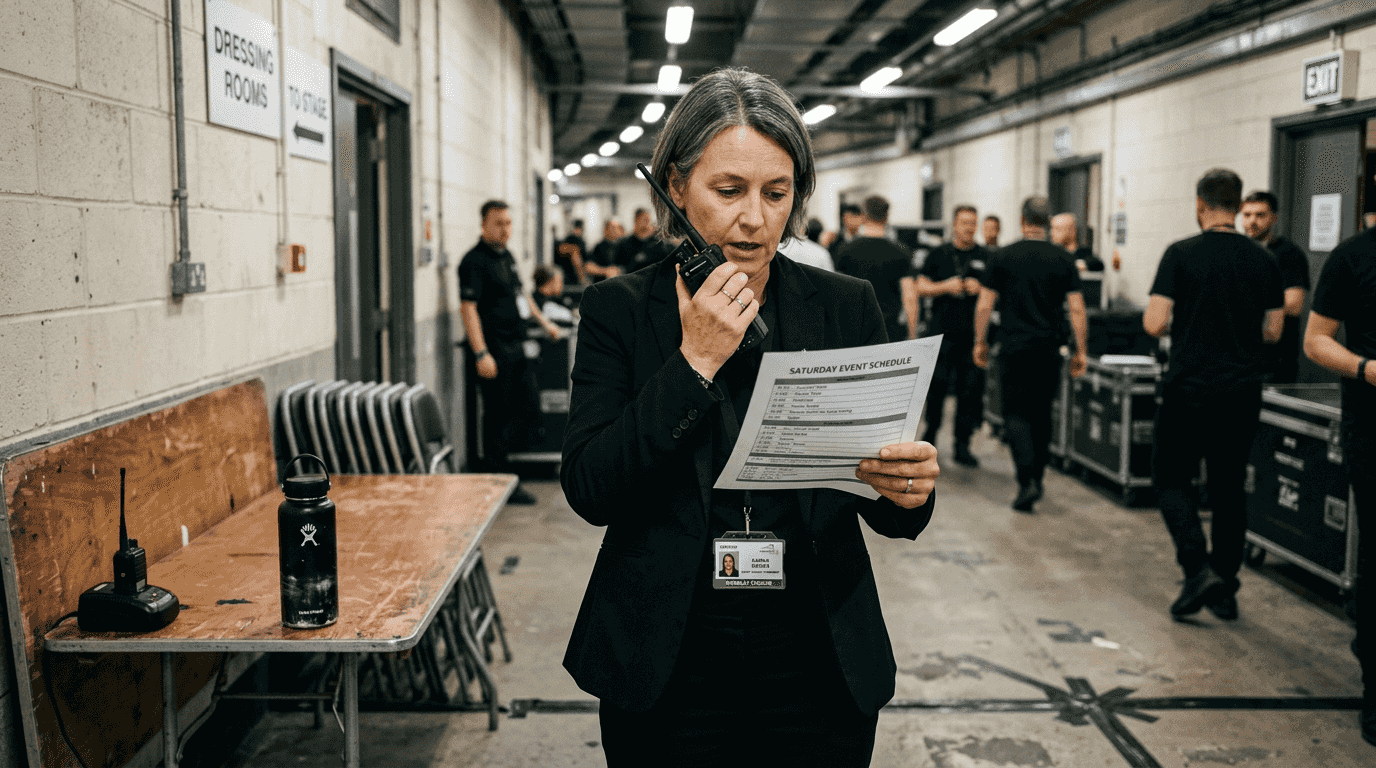
Radios maintain functionality when cellular networks fail. Network congestion during major incidents often renders mobile phones useless precisely when communication matters most. Two-way radios operate independently, ensuring your safety team stays connected regardless of external network status. This reliability makes two-way radio hire essential for organisations managing temporary high-risk operations.
Critical advantages during emergencies:
- Zero connection delay between pressing transmit and message delivery
- Simultaneous alerting of entire response teams
- Operation continues during cellular network failures
- Clear audio quality is maintained in noisy emergency environments
- Battery life supports extended emergency operations
Comparing two-way radios and smartphones for safety
Many organisations question whether smartphones can replace dedicated radio systems. Whilst modern phones offer impressive capabilities, they lack critical features essential for safety-sensitive communication. Understanding these differences prevents dangerous gaps in your safety infrastructure.
Two-way radios operate on dedicated radio frequencies independent of cellular networks. This fundamental architecture provides reliability that smartphones cannot match in challenging environments. Underground construction areas, metal-framed buildings, and remote sites often lack mobile coverage entirely. Radios maintain communication regardless of cellular infrastructure availability.
| Feature | Two-way radios | Smartphones |
|---|---|---|
| Network dependency | Independent radio frequencies | Requires cellular coverage |
| Emergency response time | Instant push-to-talk | Dial, wait for connection |
| Group communication | Simultaneous transmission | Sequential calling or app-dependent |
| Security | Hardware encryption standard | Varies by app, often vulnerable |
| Battery life | 12-24 hours typical | 6-10 hours with heavy use |
| Durability | IP67/IP68 rated, military-spec | Consumer-grade, easily damaged |
| Audio quality | Optimised for noisy environments | Designed for quiet settings |
Encrypted communication represents another critical distinction. Professional radios incorporate hardware-level encryption that protects conversations from interception. Smartphones rely on app-based security that varies widely in effectiveness. During emergencies involving accidents, security incidents, or sensitive operations, maintaining communication confidentiality prevents unauthorised parties from accessing critical information that could compromise response efforts.
Network congestion creates smartphone failures during major incidents. When hundreds of people simultaneously attempt mobile calls from the same location, cellular networks become overwhelmed. This exact scenario unfolds during building evacuations, major accidents, or security events when communication matters most. Two-way radios maintain clear channels because they operate independently of public networks.
Common misconceptions about smartphone adequacy:
- Walkie-talkie apps seem equivalent but depend on cellular data or WiFi connectivity
- Battery life appears adequate until extended emergency situations drain phones within hours
- Consumer-grade durability fails in industrial environments with dust, moisture, and impact risks
- Group messaging apps create dangerous delays during time-critical situations
- Encryption varies wildly, with many messaging apps offering minimal protection
The smartphone-as-radio fallacy particularly affects smaller organisations seeking cost savings. Whilst phones seem economical, their limitations create safety gaps that expose workers to preventable risks. Professional communication demands purpose-built tools designed specifically for safety-critical environments.
Key features of two-way radios supporting operational safety
Modern two-way radio technology extends far beyond basic voice communication. Digital Mobile Radio (DMR) systems deliver superior audio clarity, extended range, and advanced features that transform safety management in complex operational environments.
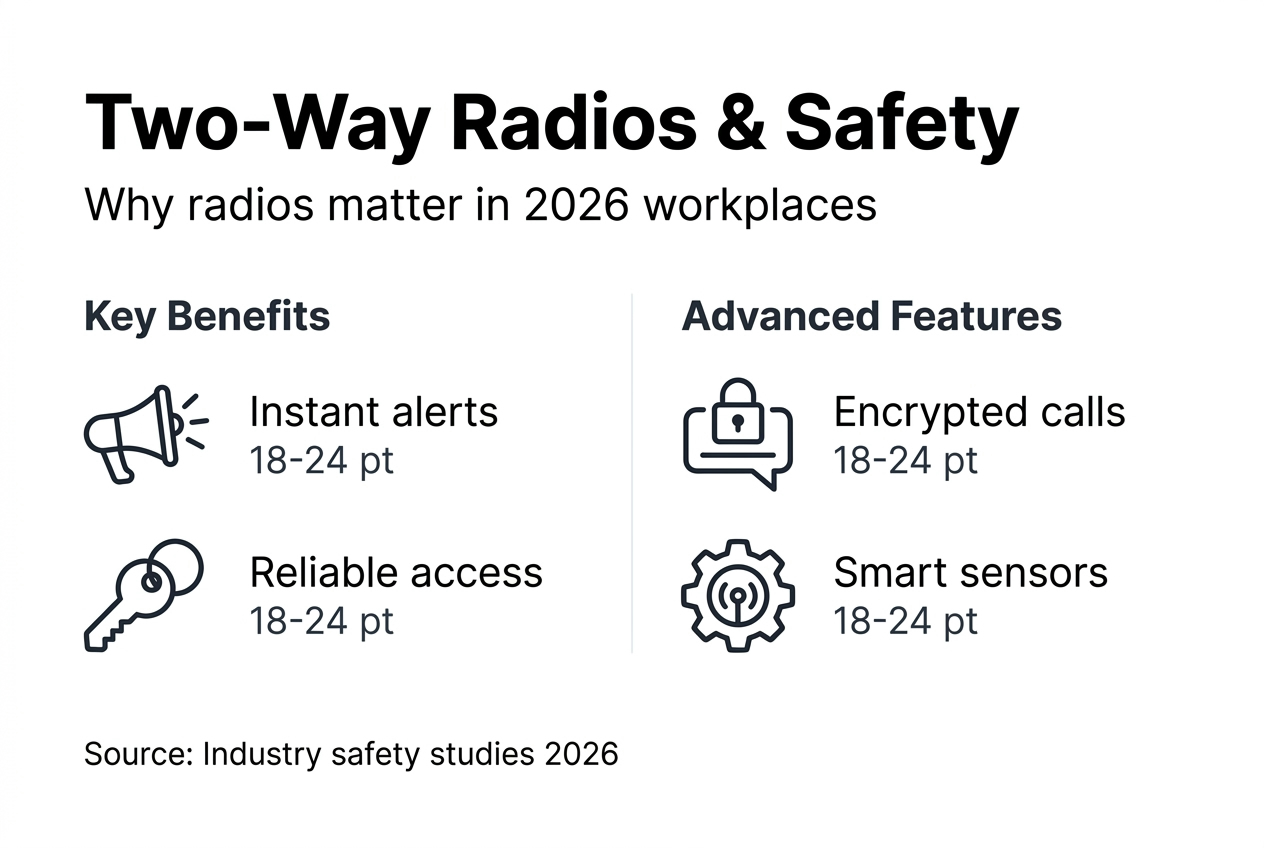
DMR technology compresses voice data digitally, enabling clearer communication at longer distances whilst reducing battery consumption. Unlike analogue radios that suffer static and degradation at range limits, digital systems maintain crisp audio until signals drop entirely. This binary performance characteristic prevents the dangerous misunderstandings that occur when partially-degraded analogue messages create confusion during emergencies.
Encryption capabilities represent a fundamental safety advantage. Two-way radios deliver secure, encrypted communication to prevent unauthorised access, protecting accident scene information and maintaining operational security. This protection proves essential in healthcare settings handling patient information, construction sites managing proprietary processes, and event venues coordinating security responses.
Integration with body-worn cameras creates comprehensive incident documentation. When safety events occur, coordinated radio transmissions and video recordings provide a complete context for investigations and liability protection. Body-worn camera hire services enable organisations to implement integrated safety monitoring without major capital investment.
Advanced radio systems connect with environmental sensors and safety devices. The HALO Smart Sensor exemplifies this integration, detecting environmental hazards and triggering automatic radio alerts to safety personnel. This automated warning system responds faster than human observation, particularly for invisible threats like gas leaks or temperature extremes.
Pro Tip: Select radio models with IP67 or IP68 ratings for dustproof and waterproof protection in harsh industrial environments. Extended battery packs supporting 16-24 hour operation prevent mid-shift communication failures during critical periods.
Essential features for safety applications:
- Digital signal processing for clear audio in noisy environments
- Lone worker monitoring with automated check-in systems
- GPS tracking for emergency location identification
- Text messaging for discreet communication in sensitive situations
- Voice recording for incident documentation and training purposes
- Emergency button triggering priority alerts to supervisors
The Hytera multi-mode advanced two-way radio demonstrates how modern systems combine traditional radio reliability with smartphone-like capabilities. These hybrid devices maintain critical voice communication whilst adding data features that enhance safety management.
Exploring comprehensive two-way radio products reveals the range of capabilities available for different operational needs. Matching radio features to specific safety requirements ensures optimal protection without paying for unnecessary capabilities.
Common misconceptions about two-way radios
Several persistent myths discourage organisations from implementing radio systems that could significantly enhance workplace safety. Addressing these misconceptions reveals the true capabilities of modern communication technology.
Myth 1: Two-way radios lack security and anyone can listen to conversations. Modern professional radios incorporate sophisticated encryption preventing unauthorised monitoring. Digital systems use AES 256-bit encryption matching banking-level security standards. Analogue radios can implement privacy codes scrambling transmissions from casual eavesdropping. The outdated image of easily-intercepted radio traffic reflects consumer-grade devices, not professional safety equipment.
Myth 2: All two-way radios are essentially the same technology. Significant differences exist between consumer radios, professional analogue systems, and digital platforms. Consumer walkie-talkies typically operate on shared frequencies with minimal range and no privacy. Professional analogue radios use licensed frequencies with greater power and privacy features. Digital systems like DMR, TETRA, and P25 offer advanced capabilities including encryption, data transmission, and sophisticated network features. Selecting inappropriate technology creates safety gaps and operational frustration.
Myth 3: Smartphones have made two-way radios obsolete for safety communication. This dangerous assumption ignores fundamental architectural differences. Smartphones depend on cellular infrastructure that fails during network congestion, natural disasters, or in coverage-poor environments. Two-way radios operate independently, maintaining communication when cellular networks collapse. The instant push-to-talk functionality eliminates connection delays that prove fatal during emergencies. Professional safety communication requires purpose-built tools, not general consumer devices.
Myth 4: Radio systems are too complex for rapid deployment and everyday use. Modern radios feature intuitive interfaces requiring minimal training. Pre-programmed channels eliminate frequency management complexity. Many organisations successfully deploy radio systems within days, with basic operational proficiency achieved in under an hour. The perceived complexity often reflects outdated experience with older equipment rather than current user-friendly designs.
Pro Tip: Schedule regular firmware updates and quarterly refresher training sessions to maintain optimal radio performance and user competence. Updated software often adds security patches and feature improvements, whilst periodic training prevents skill degradation and reinforces proper emergency protocols.
Addressing these misconceptions requires hands-on experience with professional equipment. Many safety managers discover that radio capabilities far exceed their expectations once they move beyond outdated assumptions. The technology has evolved dramatically, particularly with digital systems offering smartphone-like features whilst maintaining radio reliability.
Practical implementation: selecting and using two-way radios for safety
Implementing an effective radio communication system requires systematic assessment and planning. Following a structured approach ensures your investment delivers maximum safety benefits.
- Assess communication requirements and identify gaps in current systems. Map your facility or site to identify coverage challenges, dead zones, and areas where mobile signals fail. Document typical communication patterns during normal operations and emergency scenarios. Count how many simultaneous conversations your team requires during peak periods. This assessment reveals whether simple radio systems suffice or whether trunked networks with multiple channels become necessary.
- Evaluate digital versus analogue radio technologies based on operational needs. Digital systems provide clearer audio, better spectrum efficiency, and advanced features including encryption and data transmission. Analogue radios offer lower initial costs and simpler operation. Consider whether you need features like GPS tracking, text messaging, or integration with other safety systems. Your coverage requirements and budget constraints guide this decision.
- Determine whether purchasing or hiring best suits your situation. Project-based work, seasonal operations, and uncertain long-term needs favour hiring approaches. Permanent facilities with consistent communication requirements typically benefit from ownership. Exploring hiring two-way radios advantages clarifies financial and operational trade-offs for your specific circumstances.
- Plan integration with complementary safety equipment. Body-worn cameras, environmental sensors, and automated alert systems enhance radio effectiveness. Coordinated deployment creates comprehensive safety monitoring superior to isolated point solutions. Consider how different systems share information and whether centralised monitoring improves response coordination.
- Develop comprehensive training programmes covering normal operation and emergency protocols. Users must understand proper radio etiquette, emergency procedures, and equipment limitations. Training should include:
- Basic operation: power, channel selection, volume adjustment
- Clear communication techniques: brevity, clarity, phonetic alphabets
- Emergency procedures: priority calling, alert protocols
- Equipment care: charging, storage, damage prevention
- Troubleshooting: common issues and basic remedies
- Establish maintenance schedules and equipment lifecycle management. Regular battery replacement, firmware updates, and performance testing prevent failures during critical moments. Assign responsibility for charging, cleaning, and inspection. Create spares pools ensuring backup equipment availability when primary units require service.
- Review and refine your communication protocols quarterly. Incident reviews often reveal communication patterns requiring protocol adjustments. Technology updates may offer new capabilities enhancing safety outcomes. Regular assessment ensures your system evolves with operational needs.
Browsing comprehensive two-way radio products catalogues helps visualise available options and capabilities. Professional guidance from experienced providers accelerates the selection process whilst avoiding common implementation pitfalls.
Successful implementation transforms workplace safety by enabling the instant, reliable communication that prevents accidents from escalating into tragedies. The investment in proper radio systems pays dividends through reduced incident severity, faster emergency response, and enhanced operational coordination.
Conclusion and next steps to enhance safety with two-way radios
Reliable two-way radio communication stands as a cornerstone of effective safety management in construction, healthcare, event management, and other risk-intensive industries. The evidence demonstrates clear advantages: emergency response times drop by up to 65%, communication maintains reliability when cellular networks fail, and advanced features integrate with modern safety technologies to create comprehensive protection systems.
The security capabilities of encrypted radio channels protect sensitive information whilst maintaining operational confidentiality during emergency responses. Digital systems deliver audio clarity and extended range that analogue predecessors and smartphone alternatives cannot match. Integration with body cameras, environmental sensors, and automated alert systems creates safety ecosystems far more effective than isolated point solutions.
Persistent misconceptions about radio technology should not prevent organisations from implementing communication systems proven to save lives and reduce incident severity. Modern radios combine intuitive operation with sophisticated capabilities, making deployment practical even for organisations lacking dedicated communication specialists.
Taking action requires systematic assessment of communication needs, careful technology selection, and comprehensive implementation including user training and maintenance planning. Whether purchasing for permanent operations or hiring for project-based work, professional radio systems deliver safety benefits impossible to achieve through consumer-grade alternatives.
The professionals responsible for workplace safety carry tremendous responsibility for protecting their teams. Reliable communication infrastructure represents a fundamental investment in that mission. Consulting with experienced communication specialists accelerates the path from assessment to deployment, ensuring your radio system delivers optimal safety outcomes from day one.
Your next step involves evaluating current communication capabilities against the standards outlined in this article, then engaging with providers who can translate your safety requirements into effective radio solutions tailored to your operational environment.
Explore professional two-way radio solutions with Smye-Rumsby
Enhancing workplace safety through reliable communication starts with expert guidance and proven technology. Since 1948, Smye-Rumsby has specialised in critical communication solutions for safety-sensitive industries across the South East of England.
Our team helps you navigate the decision between hiring versus purchasing two-way radios, ensuring your investment matches operational needs and budget constraints. We offer advanced digital systems, including the Hytera multi-mode radio platform, combining traditional reliability with modern data capabilities. Integrated safety solutions extend beyond radios to include body-worn camera systems for comprehensive incident documentation. Professional installation, ongoing maintenance, and dedicated support ensure your communication infrastructure performs reliably when safety demands it most.
Frequently asked questions
Can two-way radios function without cellular networks?
Yes, two-way radios operate entirely independently of cellular infrastructure using dedicated radio frequencies. This makes them ideal for underground construction sites, remote locations, metal-framed buildings, and other environments where mobile phone signals fail or become unreliable.
Are two-way radio communications secure from interception?
Modern professional radios feature encrypted communication, preventing unauthorised access to conversations. Digital systems typically employ AES 256-bit encryption, matching banking security standards. Even analogue systems can implement privacy codes that scramble transmissions from casual eavesdropping.
How do I choose between digital and analogue two-way radios?
Digital radios offer clearer audio, superior encryption, better spectrum efficiency, and advanced features like GPS tracking and text messaging. Analogue systems provide lower upfront costs and simpler operation, suitable for basic communication needs. Consider your coverage requirements, security needs, feature priorities, and budget when deciding. Exploring comprehensive two-way radio product ranges helps visualise capabilities across different technology tiers.
Recommended
- Why hire a two-way radio instead of purchasing? – Smye-Rumsby – Experts in Two-Way Radios and Marine Electronics
- Two-Way Radio Hire For Events – Smye-Rumsby – Experts in Two-Way Radios and Marine Electronics
- We are experts in Two-Way Radios & Marine Electronics in Kent
- Two-Way Radio Installation at Dover Castle – Smye-Rumsby – Experts in Two-Way Radios and Marine Electronics