
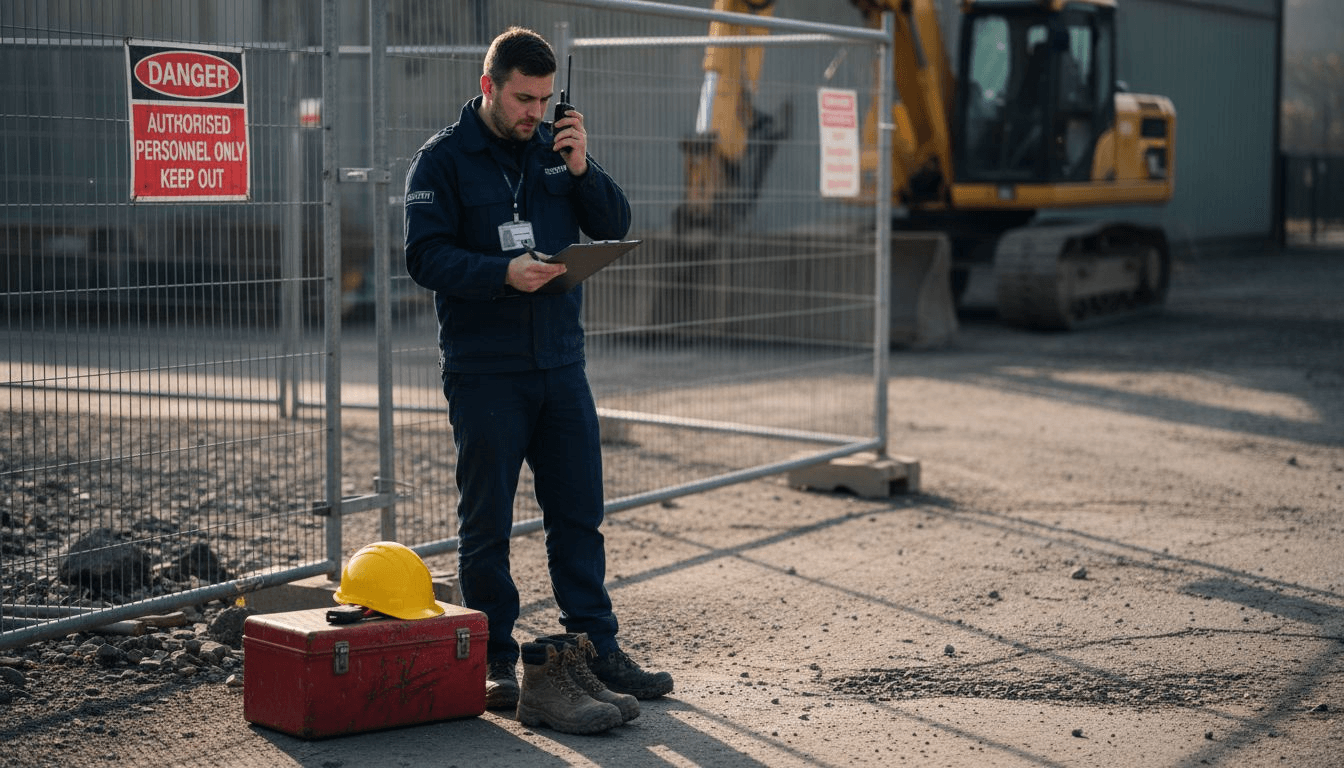
Choosing effective communication tools for demanding work environments challenges many UK professionals. Two-way radios remain critical for instant, reliable, and secure communication across security, construction, marine services, healthcare, and event management sectors. This guide showcases practical industry applications and explains how to select the right radio technology based on your operational needs, environment, and budget constraints.
Table of Contents
- How To Choose The Right Two-Way Radio: Key Selection Criteria
- Two-Way Radios In Security: Real-Time Coordination And Safety
- Construction Industry: Rugged And Instant Communication
- Marine Services: Compliance And Reliable Communication
- Selecting The Right Two-Way Radio Technology: Analogue, Digital, Poc
- Situational Recommendations: Choosing The Best Radio For Your Needs
- Explore Two-Way Radio Hire And Purchase Options With Smye-Rumsby
- Frequently Asked Questions
Key takeaways
| Point | Details |
|---|---|
| Industry applications | Two-way radios boost safety and coordination in security, construction, marine, healthcare, and event sectors through instant voice communication. |
| Selection criteria | Durability, communication range, security features, and cost models determine the best radio choice for your professional environment. |
| Technology options | Digital and PoC radios offer advanced features over analogue systems, suited to various professional communication needs and budgets. |
| Flexible acquisition | Rental options provide flexibility for temporary projects like events, whilst purchase suits long-term industrial and marine operations. |
| Enhanced integration | Pairing radios with tools like body-worn cameras significantly improves operational efficiency, particularly in security applications. |
How to choose the right two-way radio: key selection criteria
Selecting the optimal two-way radio requires evaluating several critical factors that match your industry demands and working conditions. Understanding these criteria helps you avoid costly mistakes and ensures your communication system delivers reliable performance when you need it most.
Start by assessing durability requirements for your specific environment. IP ratings indicate protection levels against dust and water exposure. An IP67-rated radio withstands submersion in water up to one metre for 30 minutes, making it essential for construction sites or marine applications where harsh conditions are routine.
Communication range depends heavily on your site layout and physical obstacles. Open areas allow longer transmission distances, whilst buildings, terrain, and dense materials reduce effective range. Digital Mobile Radios typically provide clearer communication over greater distances compared to analogue alternatives, especially in challenging environments.
Technology choice fundamentally shapes your communication capabilities. Analogue radios offer simple, cost-effective solutions for basic needs. Digital systems provide encryption, better audio clarity, and scalable network features. Push-to-talk over cellular radios leverage existing mobile networks for virtually unlimited range, though they depend on network coverage and data costs.
Security features matter significantly in sensitive operations. Digital encryption protects transmissions from interception, essential for security teams and healthcare settings handling confidential information. Verify that your chosen system complies with relevant industry regulations and data protection requirements.
Cost models require careful consideration of project duration and budget. Short-term events benefit from rental arrangements, saving approximately 40% compared to purchase costs. Long-term industrial applications justify purchasing equipment to eliminate ongoing rental expenses. Smye-Rumsby offers flexible two-way radio rental and purchase options tailored to different project timelines and budgets.
Pro Tip: Calculate total cost of ownership over three years to determine whether rental or purchase delivers better value for your specific usage pattern and frequency.
Key selection factors include:
- IP rating matching your environmental exposure levels
- Transmission range covering your operational area
- Battery life supporting full shift operations without charging
- Audio quality ensuring clear communication in noisy environments
- Integration capabilities with existing systems and accessories
- Compliance with industry-specific regulations and standards
Two-way radios in security: real-time coordination and safety
Security professionals depend on instant, encrypted communication to manage incidents effectively and maintain operational safety across sites. Digital two-way radios enable security teams to coordinate responses faster and more securely than traditional communication methods.
Security teams report up to 25% faster coordination during incidents using two-way radios compared to mobile phones. This speed advantage proves critical during emergencies where every second affects outcomes and safety.
Encrypted digital radios prevent unauthorised interception of sensitive communications. Security operations often involve confidential information about personnel movements, incident details, and response strategies that require protection. Digital encryption ensures only authorised team members access these transmissions, maintaining operational security.
Integration with body-worn cameras transforms security operations by combining instant voice communication with visual evidence capture. Officers can request immediate backup whilst automatically recording incidents for accountability and legal compliance. This dual capability strengthens both real-time response and post-incident investigation.
Practical security applications demonstrate the versatility of two-way radios:
- Crowd control at large venues requiring coordinated team positioning
- Emergency evacuation procedures demanding instant broadcast capabilities
- Patrol synchronisation across multiple zones or buildings
- Incident response coordination between officers and control rooms
- Access control management at entry points and secure areas
“The integration of encrypted radios with body-worn cameras has revolutionised our incident management. We can communicate instantly whilst ensuring every interaction is documented for accountability.”
Security Operations Manager, Major UK Venue
Digital radios offer superior audio quality in noisy environments common to security work, including busy venues, construction sites, and transport hubs. Clear communication reduces misunderstandings that could compromise safety or response effectiveness.
Construction industry: rugged and instant communication
Construction sites demand communication tools that withstand harsh conditions whilst delivering instant coordination capabilities. Approximately 70% of UK construction firms rely on digital radios for site communication, reflecting their proven reliability and clarity.
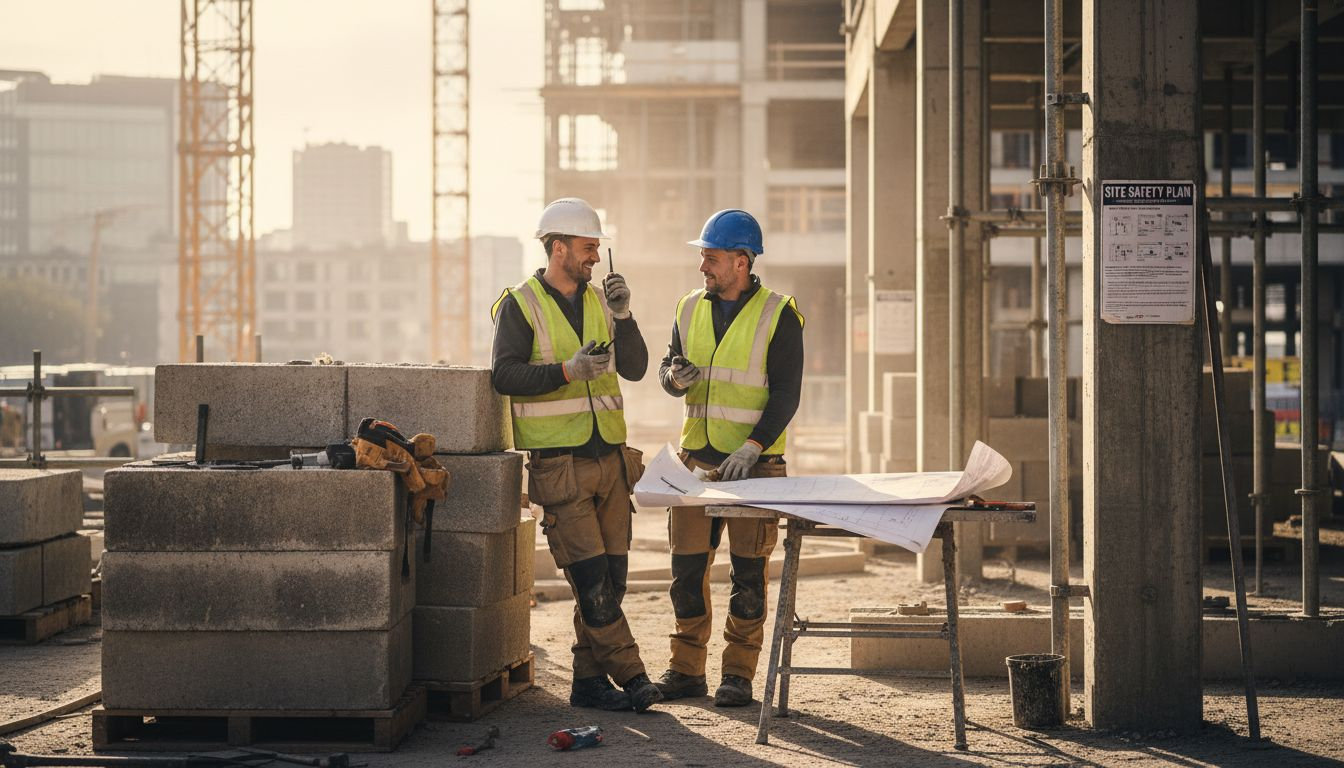
Ruggedisation determines radio survival on construction sites. IP67-rated devices resist dust ingress and water immersion, essential for equipment exposed to cement dust, rain, and accidental drops from height. Military-grade shock protection ensures radios continue functioning after impacts that would destroy consumer devices.
Push-to-talk functionality enables immediate safety alerts when hazards emerge. A site supervisor can broadcast warnings about overhead crane movements, unstable structures, or equipment malfunctions to all workers simultaneously. This instant notification capability prevents accidents that delayed communication could allow.
Long battery life supports full-shift operation without interruption. Construction workers cannot stop to recharge devices during critical operations. Quality digital radios provide 12-16 hours of battery life under typical usage patterns, ensuring reliable communication throughout extended shifts.
Simple operation improves adoption amongst diverse workforces. Construction teams include workers with varying technical familiarity, so intuitive controls and straightforward functionality ensure everyone can communicate effectively without extensive training.
| Radio feature | Construction benefit | Typical specification |
|---|---|---|
| IP rating | Dust and water resistance | IP67 minimum |
| Drop protection | Survives falls from height | 2 metres onto concrete |
| Battery life | Full-shift operation | 12-16 hours typical use |
| Audio output | Clear in noisy environments | 100+ decibels |
| Temperature range | Operates in extreme conditions | -30°C to +60°C |
Practical construction applications include:
- Coordinating deliveries and crane operations across large sites
- Broadcasting safety alerts about hazards or evacuations
- Managing subcontractor activities across multiple zones
- Coordinating equipment movements to prevent accidents
- Emergency response during incidents requiring immediate assistance
The construction radio installation at Dover Castle demonstrates how professional systems support complex heritage restoration projects requiring careful coordination across multiple teams.
Pro Tip: Specify radios with emergency alert buttons that broadcast distress signals with location information, enabling rapid response to lone worker incidents or accidents.
Marine services: compliance and reliable communication
Maritime operations depend absolutely on reliable VHF two-way radios for safety, regulatory compliance, and routine vessel coordination. Over 90% of UK vessels operate with certified VHF radios, reflecting their indispensable role in maritime communication.
Emergency distress signalling through Channel 16 provides vital lifesaving communication capabilities. VHF radios enable vessels in distress to broadcast mayday calls that coastguard stations and nearby vessels receive immediately. This emergency capability alone justifies VHF radio investment for any vessel operating beyond sheltered waters.
Maritime safety regulations mandate VHF radio equipment on commercial vessels and strongly recommend installation on recreational craft. Compliance ensures vessels can communicate with harbour authorities, coastguard services, and other vessels for safe navigation and emergency response. Non-compliance risks penalties and compromises crew safety.
Marine-specific design protects radios against harsh maritime conditions. Sealed construction resists moisture ingress and salt corrosion that rapidly damage non-marine electronics. Floating designs and bright colours aid recovery if radios fall overboard during rough conditions.
Ship-to-ship and ship-to-shore communication supports daily operational needs beyond emergencies. Vessels coordinate movements in busy ports, communicate with marinas about berth availability, and maintain contact with shore bases. This routine communication improves operational efficiency and situational awareness.
Essential marine radio applications include:
- Emergency distress calls on Channel 16 for immediate assistance
- Port operations coordination with harbour authorities and pilots
- Weather forecast reception for voyage planning and safety
- Navigation safety communication in busy shipping lanes
- Crew coordination between vessel and tender operations
Smye-Rumsby provides comprehensive marine communication and compliance solutions that integrate VHF radios with chartplotters and navigation equipment for complete maritime communication readiness.
Selecting the right two-way radio technology: analogue, digital, PoC
Three primary radio technologies serve different professional needs, budgets, and operational requirements. Understanding their capabilities helps match technology to your specific communication challenges.
Analogue radios represent traditional technology offering simple, cost-effective communication. They provide reliable basic voice transmission without advanced features. However, analogue systems lack encryption security, offer shorter effective range, and deliver poorer audio quality in challenging environments compared to digital alternatives.
Digital Mobile Radios deliver significant advantages through modern technology. DMR systems provide encrypted communication protecting sensitive transmissions, superior audio clarity through noise cancellation, and scalable network capabilities supporting large organisations. Digital radios typically cost 20-30% more than analogue equivalents but deliver substantially better performance and security.
Push-to-Talk over Cellular radios leverage existing 4G and 5G mobile networks for communication. PoC systems offer virtually unlimited range wherever network coverage exists, making them ideal for organisations operating across wide geographical areas. However, they depend on network availability and incur ongoing data costs that may exceed traditional radio expenses.
| Technology | Range | Security | Audio quality | Network cost | Best for |
|---|---|---|---|---|---|
| Analogue | 3-5 km | Low | Moderate | None | Basic short-range needs |
| Digital DMR | 5-8 km | High | Excellent | None | Industrial operations |
| PoC | Unlimited | High | Excellent | Monthly data | Wide-area coverage |
IP67 ruggedisation remains important across all technologies for industrial environments. Whether analogue, digital, or PoC, radios must withstand dust, moisture, and impact to deliver reliable service in demanding professional settings.
Match technology choice to your specific requirements. Security operations benefit from encrypted digital radios. Construction sites need ruggedised digital systems with long battery life. National operations may justify PoC technology despite higher running costs. Compare the Motorola R5 analogue and digital options to understand practical differences.
Situational recommendations: choosing the best radio for your needs
Practical industry-specific guidance helps translate technical specifications into optimal radio selections for your operational environment and communication requirements.
- Security operations: Deploy encrypted digital radios integrated with body-worn cameras for real-time incident response and evidence capture. Prioritise models offering emergency alert buttons and GPS tracking for lone worker safety. Channel capacity should support multiple teams operating simultaneously without interference.
- Construction sites: Select ruggedised IP67-rated digital radios with minimum 12-hour battery life for harsh site conditions. Loud audio output ensures clear communication over machinery noise. Simple controls enable quick adoption across diverse workforces with varying technical experience.
- Marine vessels: Install VHF radios compliant with maritime regulations for reliable distress communication and harbour coordination. Ensure waterproof construction, floating capability, and Channel 16 emergency access. Consider DSC-enabled models for automated distress alerting.
- Healthcare facilities: Specify disinfectant-proof digital radios supporting instant communication to reduce emergency response delays. Lightweight designs and vibration alerts enable discreet operation in patient care areas. Prioritise models with antimicrobial casing preventing infection transmission.
- Events and festivals: Arrange rental digital radios offering flexible channel programming for short-term large venue coordination. Multiple channels support different operational teams including security, logistics, and medical services. Consider PoC systems for multi-site festivals requiring extended range. Explore event radio hire solutions for temporary requirements.
Explore two-way radio hire and purchase options with Smye-Rumsby
Selecting the right communication solution requires expert guidance matching radio capabilities to your specific operational needs. Whether you need equipment for a weekend event or permanent industrial installation, professional advice ensures optimal performance and value.
Smye-Rumsby offers comprehensive expertise on two-way radio hire versus purchase options tailored to professional requirements across security, construction, marine, healthcare, and event sectors. Flexible rental arrangements accommodate short-term projects, whilst purchase solutions support long-term industrial and marine applications with full installation and maintenance support.
Our event radio hire services provide scalable communication for festivals, conferences, and temporary operations requiring reliable coordination. Marine operators benefit from integrated equipment bundles including chartplotters and VHF radio systems ensuring complete maritime communication compliance and capability.
Frequently asked questions
What industries benefit most from two-way radios?
Security, construction, marine services, healthcare, and event management sectors gain substantial operational advantages from two-way radios. These industries require instant, reliable communication where mobile networks may prove inadequate or where simultaneous team coordination proves essential for safety and efficiency.
How do I choose between renting or buying two-way radios?
Renting suits short-term or occasional use, typically saving approximately 40% compared to purchase costs for projects under six months. Buying proves more economical for permanent operations where ongoing rental expenses exceed purchase investment within 12-18 months of continuous use.
What features ensure two-way radios are suitable for harsh environments?
Look for IP67 ratings providing dust and water resistance suitable for construction sites and marine applications. Robust casing protecting against drops from two metres, extended battery life supporting 12-16 hour shifts, and wide temperature ranges enable reliable performance in demanding industrial settings.
Are two-way radios secure against eavesdropping?
Digital radios provide strong encryption protocols protecting transmissions from unauthorised interception, essential for security and healthcare operations handling sensitive information. Security-focused models integrate seamlessly with compliance tools maintaining confidentiality whilst supporting audit requirements and regulatory standards.
Can two-way radios integrate with other security equipment?
Modern digital radios integrate effectively with body-worn cameras, access control systems, and alarm monitoring platforms. This integration enables coordinated security responses combining instant voice communication with visual evidence capture and automated alert triggering for comprehensive operational capability.
Recommended
- Why hire a two-way radio instead of purchasing? – Smye-Rumsby – Experts in Two-Way Radios and Marine Electronics
- Two Way Radio Hire For Events – Smye-Rumsby – Experts in Two-Way Radios and Marine Electronics
- Motorola R5 – Two-Way Radios supplied by Smye Rumsby
- We are experts in Two-Way Radios & Marine Electronics in Kent