
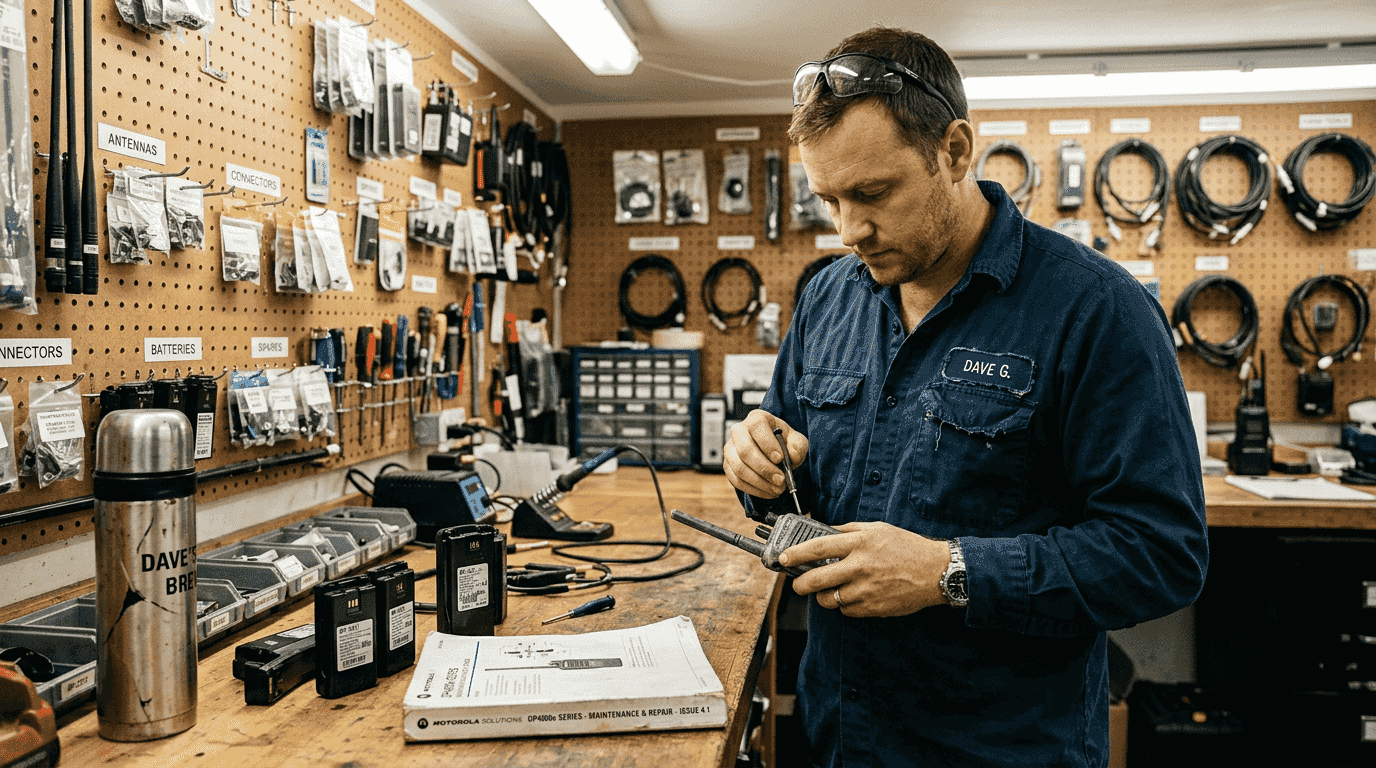
Two-way radios form the backbone of critical communication in security, construction, healthcare, and marine operations. When these systems fail due to neglected maintenance, the consequences extend beyond inconvenience to genuine safety risks and operational disruption. Establishing a structured maintenance workflow transforms reactive repairs into proactive reliability, ensuring your communication infrastructure performs when it matters most. This article outlines practical steps technical staff and decision-makers can implement to maintain radio systems effectively, reduce downtime, and maximise equipment lifespan across demanding operational environments.
Table of Contents
- Understanding The Components Of An Effective Radio Maintenance Workflow
- Step-By-Step Radio Maintenance Workflow: From Inspection To Repair And Replacement
- Testing And Verification To Ensure Reliable Radio Performance
- Troubleshooting Common Mistakes And Optimising The Workflow For Your Industry
- Enhance Your Radio Maintenance With Expert Support From Smye-Rumsby
- Frequently Asked Questions
Key takeaways
| Point | Details |
|---|---|
| Regular maintenance reduces downtime | Structured maintenance schedules prevent communication failures and extend equipment lifespan significantly |
| Battery management is critical | Proper charging and storage practices can extend battery life by up to 30% |
| Firmware updates enhance security | Routine updates fix vulnerabilities and improve functionality across radio fleets |
| Replacement beats repeated repairs | Chronic issues and outdated technology justify strategic equipment upgrades |
| Testing validates maintenance work | Range, audio, and power supply checks confirm radios operate reliably post-service |
Understanding the components of an effective radio maintenance workflow
A structured maintenance workflow encompasses regular inspections, firmware updates, component replacements, and detailed documentation. Implementing a preventative maintenance schedule reduces downtime and increases the longevity of radio systems, particularly in mission-critical environments where communication failures carry serious consequences. Technical teams need clear frameworks before executing maintenance tasks.
Maintenance logs form the foundation of any effective workflow. Document every inspection, repair, firmware update, and component replacement with dates, technician names, and specific issues identified. These records enable trend analysis, revealing recurring problems that might indicate deeper systemic issues or environmental factors requiring attention. Logs also support warranty claims and regulatory compliance in sectors like healthcare and marine operations.
Personnel roles must be clearly defined to avoid gaps in responsibility. Designate specific team members for routine inspections, another for firmware management and reprogramming, and a third for physical repairs and component replacements. In smaller operations, one person may handle multiple roles, but clear accountability remains essential. Training ensures each team member understands their responsibilities and follows radio maintenance best practices consistently.
Maintenance schedules should adapt to operational environment severity and usage intensity. Construction sites with heavy dust exposure require more frequent cleaning and inspection than office environments. Marine radios face salt spray and moisture, demanding weekly checks during active seasons. Security teams using radios continuously need monthly battery assessments, while event hire equipment requires thorough testing before and after each deployment.
Essential tools and materials include:
- Cleaning supplies: compressed air, lint-free cloths, contact cleaner for connectors
- Testing equipment: power meters, dummy loads, signal strength meters
- Replacement components: batteries, antennas, belt clips, speaker microphones
- Programming cables and software for firmware updates
- Maintenance log templates or digital tracking systems
Consult manufacturer resources like the Motorola radio maintenance manual for model-specific procedures and recommended service intervals. Different radio families have unique requirements that generic approaches may miss.
Pro tip: Create environment-specific maintenance checklists that address the particular challenges your radios face, whether dust in construction, moisture in marine settings, or temperature extremes in outdoor security work.
| Maintenance Component | Frequency | Responsible Role |
|---|---|---|
| Visual inspection | Weekly | Field technician |
| Battery testing | Monthly | Equipment specialist |
| Firmware updates | Quarterly | IT/programming lead |
| Deep cleaning | Monthly | Maintenance technician |
| Full system audit | Annually | Senior technical manager |
Step-by-step radio maintenance workflow: from inspection to repair and replacement
Executing maintenance operations systematically ensures nothing gets overlooked. Begin with comprehensive visual and functional inspections covering every radio in your fleet. Examine antennas for bends, cracks, or loose connections that degrade signal strength. Check body casings for impact damage, worn seals, or cracked displays. Inspect battery contacts for corrosion, which appears as white or green deposits preventing proper charging.
Cleaning radios regularly prevents dust and debris from infiltrating internal components. Use compressed air to clear speaker grilles, microphone ports, and charging contacts. Wipe external surfaces with lint-free cloths slightly dampened with approved cleaning solutions. Never use harsh chemicals that might damage rubber seals or plastic housings. In harsh environments like construction sites or marine vessels, cleaning frequency should increase to weekly intervals.

Battery management directly impacts operational reliability. Charge batteries according to manufacturer specifications, avoiding both overcharging and deep discharge cycles that reduce capacity. Store spare batteries in cool, dry locations away from metal objects that could short terminals. Monitor battery performance metrics, replacing units showing significant capacity loss. Proper battery maintenance techniques can extend lifespan by up to 30%, reducing replacement costs substantially.
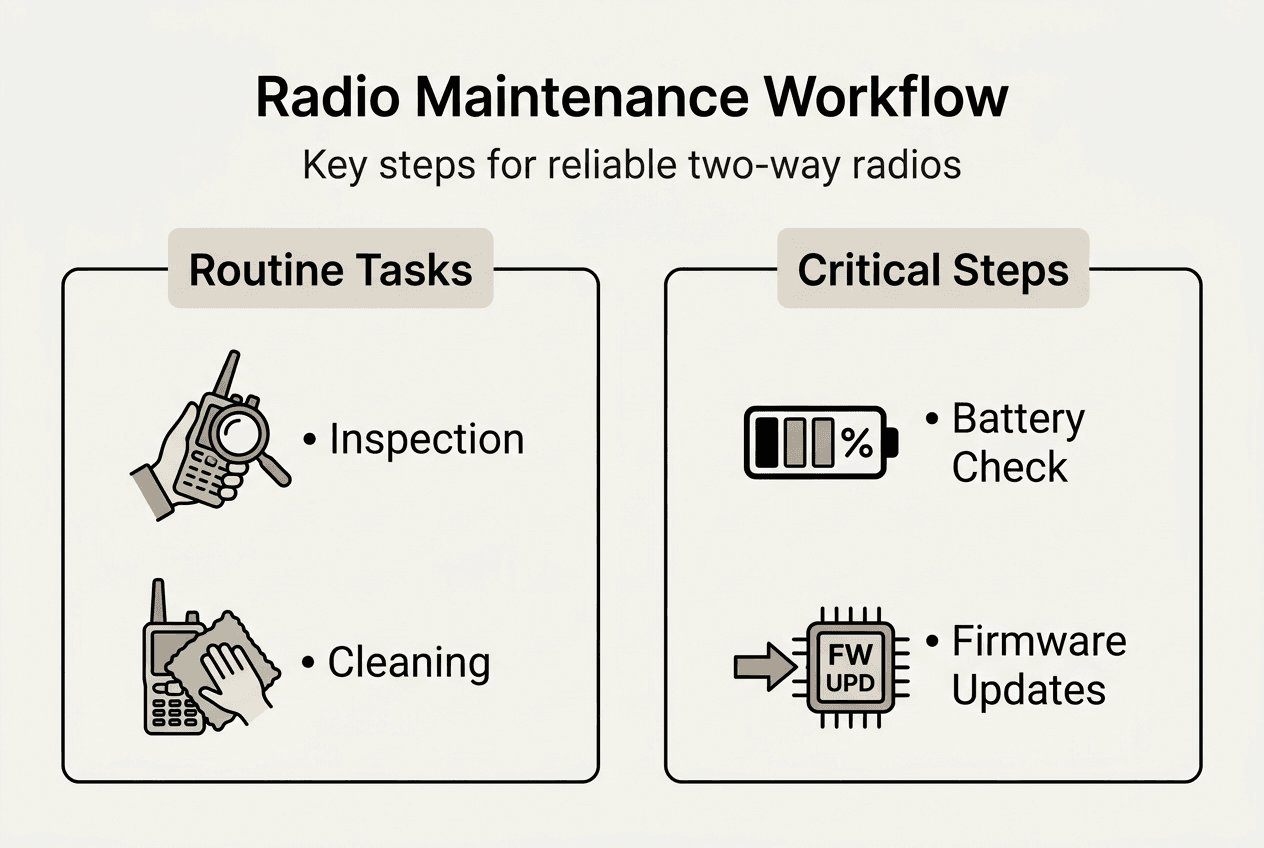
Firmware updates enhance security, fix bugs, and sometimes add new capabilities to existing hardware. Schedule quarterly reviews of manufacturer release notes to identify relevant updates for your radio models. Test firmware on a small subset of radios before fleet-wide deployment to catch compatibility issues. Document firmware versions in maintenance logs to track which radios received updates and when.
Reprogramming is the right move when stronger security, auditability, and standardised templates are needed across your communication network. Update channel assignments, add new talk groups, or modify privacy codes as operational requirements evolve. Reprogramming also enables migration from analogue to digital modes when upgrading infrastructure.
Deciding between repair and replacement requires cost-benefit analysis. Minor faults like damaged antennas, worn belt clips, or failing batteries warrant straightforward repairs. Chronic problems such as repeated power failures, intermittent transmission issues, or water damage affecting internal circuits suggest replacement makes better economic sense. Outdated technology lacking features your operation now requires also justifies strategic upgrades.
Pro tip: Never transmit without an antenna or dummy load connected. Doing so forces radio frequency energy back into the transmitter, potentially damaging power amplifiers and other sensitive components beyond economical repair.
Follow this maintenance sequence:
- Power down the radio completely before beginning any physical inspection or cleaning
- Perform visual inspection documenting any damage, wear, or corrosion in maintenance logs
- Clean external surfaces, ports, and contacts using appropriate tools and solutions
- Test battery voltage and capacity, replacing units below acceptable thresholds
- Check firmware version against latest manufacturer releases, updating as needed
- Reprogram channel assignments or settings if operational requirements have changed
- Conduct functional tests before returning radio to service
| Maintenance Action | When to Repair | When to Replace |
|---|---|---|
| Antenna damage | Bent but functional | Cracked or broken at base |
| Battery issues | Moderate capacity loss | Severe capacity loss or swelling |
| Housing damage | Cosmetic scratches | Compromised water seals |
| Transmission problems | Intermittent with known cause | Chronic failures after repairs |
| Technology gap | Current model meets needs | Requires features not available |
Consult resources like the firmware updates and reprogramming guide for detailed procedures specific to your radio models.
Testing and verification to ensure reliable radio performance
Validating maintenance effectiveness requires systematic testing protocols. Range tests confirm radios achieve expected coverage across operational areas. Conduct tests from typical usage locations, noting any dead zones or areas with degraded signal quality. Audio quality assessments identify distortion, low volume, or background noise indicating speaker or microphone problems requiring attention.
Power supply voltage stability affects transmission reliability and audio performance. Use a multimeter to verify battery voltage under load matches manufacturer specifications. Erratic voltage readings suggest battery degradation or charging system faults. Marine radios drawing power from vessel electrical systems require particular attention, as voltage fluctuations from alternators or shore power can cause operational issues.
Antenna connections and cabling deserve thorough inspection during testing phases. Loose connectors reduce signal strength noticeably. Corrosion on coaxial cable connectors, common in marine environments, creates impedance mismatches that degrade both transmission and reception. Replace corroded connectors immediately rather than attempting to clean heavily oxidised surfaces.
Regular VHF marine radio testing ensures reliable operation before each season, particularly critical for vessels operating in remote waters where communication failures pose genuine safety risks. Shore-based testing facilities can verify transmitter power output, receiver sensitivity, and digital selective calling functionality meets regulatory standards.
Log all test results systematically for trend analysis. Declining range over successive tests might indicate antenna degradation or internal component wear. Gradual audio quality reduction could signal speaker membrane deterioration. Early detection through consistent logging enables proactive component replacement before complete failures occur during critical operations.
Testing procedures should include:
- Range verification from maximum expected operational distance
- Audio clarity assessment at various volume levels
- Battery voltage measurement under transmit load
- Antenna system continuity and impedance checks
- Emergency feature testing including lone worker and man-down alerts
- Channel scanning and priority monitoring functionality
Pro tip: Turn radios off or switch to standby before disconnecting any coaxial cables. Transmitting into an open connector can damage the radio’s power amplifier stage, requiring expensive repairs or complete unit replacement.
Maintain detailed test records noting environmental conditions during testing. Temperature extremes, high humidity, or electromagnetic interference from nearby equipment can affect results. Understanding environmental context helps distinguish genuine equipment faults from temporary operational conditions. Refer to VHF marine radio testing procedures for marine-specific testing protocols addressing salt spray, moisture ingress, and vessel electrical system integration.
Troubleshooting common mistakes and optimising the workflow for your industry
Improper battery charging and storage practices can halve battery lifespan, creating unnecessary replacement costs and operational disruptions. Avoid leaving batteries on chargers for extended periods beyond full charge completion. Store batteries partially charged rather than fully depleted for long-term storage. Temperature extremes during storage accelerate chemical degradation, so maintain climate-controlled storage areas when possible.
Regular inspection of antennas, connectors, and cables prevents signal degradation that manifests as reduced range or poor audio quality. Visual inspection alone misses internal cable damage, so periodic continuity testing with appropriate equipment catches hidden faults. Connector corrosion progresses rapidly in marine and coastal environments, requiring more frequent replacement than inland operations.
Maintenance frequency must adapt to environmental severity. Construction sites generate dust that infiltrates radio housings despite ingress protection ratings. Marine environments expose equipment to salt spray accelerating corrosion. Healthcare facilities may have less physical stress but require stringent hygiene protocols including regular disinfection that can degrade rubber seals and plastic components over time.
Ignoring environmental factors like moisture and temperature can lead to corrosion and internal damage, particularly in radios lacking adequate ingress protection for their operational environment. Radios rated IP54 suffice for office use but fail quickly in marine applications requiring IP67 or higher ratings.
Documentation and logging track recurring issues revealing patterns that individual incident reports miss. Multiple radios showing similar faults might indicate a batch quality issue, environmental factor affecting the entire fleet, or training gap in user handling. Systematic analysis of maintenance logs enables proactive solutions rather than reactive repairs.
Never transmit without an antenna or dummy load connected. That can damage the radio by forcing radio frequency energy back into sensitive transmitter components, potentially destroying power amplifiers and requiring complete unit replacement.
Industry-specific optimisations improve workflow efficiency:
- Security operations: Prioritise battery management given continuous usage patterns and implement rapid-swap battery systems for 24/7 operations
- Construction sites: Increase cleaning frequency and inspect ingress protection seals monthly due to dust and debris exposure
- Healthcare facilities: Coordinate maintenance with infection control protocols and use approved cleaning agents compatible with medical environments
- Marine operations: Focus on corrosion prevention, verify waterproof seal integrity before each season, and maintain spare antennas for rapid replacement
Mixed fleet operations using both analogue and digital radios require careful workflow planning to address different maintenance needs. Digital radios need firmware updates and programming cable compatibility verification. Analogue units require different testing approaches lacking digital diagnostic capabilities. Consider radio solutions for mixed fleets that simplify maintenance across technology generations.
Common troubleshooting mistakes include assuming software issues when hardware faults exist, or vice versa. Systematic diagnosis following manufacturer troubleshooting guides prevents wasted time on incorrect solutions. Consult resources like antenna inspection tips for detailed guidance on identifying and resolving antenna system problems affecting overall radio performance.
Enhance your radio maintenance with expert support from Smye-Rumsby
Implementing these maintenance workflows becomes significantly easier with access to professional-grade equipment and expert support. Whether you need reliable radios for short-term projects or permanent fleet solutions, two-way radio hire options provide flexibility without long-term capital commitments. Hiring eliminates maintenance responsibilities entirely, as equipment arrives fully serviced and tested.
For organisations building permanent communication infrastructure, explore our comprehensive range of two-way radio products from leading manufacturers including Motorola and Kenwood. These proven platforms deliver the reliability your operations demand whilst supporting straightforward maintenance workflows. Advanced two-way radio models offer enhanced features including GPS tracking, Bluetooth connectivity, and man-down alerts that improve both safety and operational efficiency. Our technical team provides ongoing support ensuring your maintenance workflows remain effective as your communication needs evolve.
Frequently asked questions
What is a radio maintenance workflow?
A radio maintenance workflow is a systematic process of inspecting, maintaining, repairing, and updating two-way radios to ensure dependable operation. It includes scheduled tasks like battery testing, firmware updates, cleaning, and performance verification. Structured workflows prevent communication failures and prolong equipment lifespan significantly.
How often should two-way radios be maintained?
Maintenance frequency depends on usage intensity and environmental conditions. Office environments may require only monthly inspections, whilst harsh environments like marine or construction demand weekly or even daily checks. Radios in continuous use need more frequent battery assessments and cleaning than occasional-use equipment.
When is it better to replace rather than repair radios?
Chronic malfunctions, outdated technology, or operational capability gaps suggest replacement makes better economic sense. Replacing radios eliminates chronic issues and unlocks capabilities not achievable with older equipment. Upgrading to digital standards improves coverage, security, and system integration. Consider the total cost of ownership, including downtime, repeated repair costs, and operational limitations when making replacement decisions.
What are common mistakes to avoid in radio maintenance?
Improper battery charging and storage can reduce lifespan by up to 50%, creating unnecessary replacement costs. Ignoring firmware updates exposes systems to security vulnerabilities and misses performance improvements. Neglecting to clean radios allows dust and moisture to cause equipment failures, particularly in demanding environments. Never transmit without an antenna connected, as this damages internal components.
How can I test marine VHF radios effectively?
Perform range, audio, and power supply checks regularly to ensure reliable operation before each boating season. Inspect connections and cables for corrosion, which progresses rapidly in saltwater environments. Test digital selective calling functionality and emergency features. Avoid transmitting without an antenna connected to prevent transmitter damage. Shore-based testing facilities can verify compliance with regulatory standards. Refer to marine radio testing procedures for detailed protocols addressing marine-specific requirements.