
TL;DR:
- VHF radios operate on regulated frequencies, offering greater range and reliability for critical industries.
- Line-of-sight transmission limits VHF range, but power output and repeaters can extend coverage.
- Proper equipment selection, configuration, and maintenance are essential for safety and effective communication.
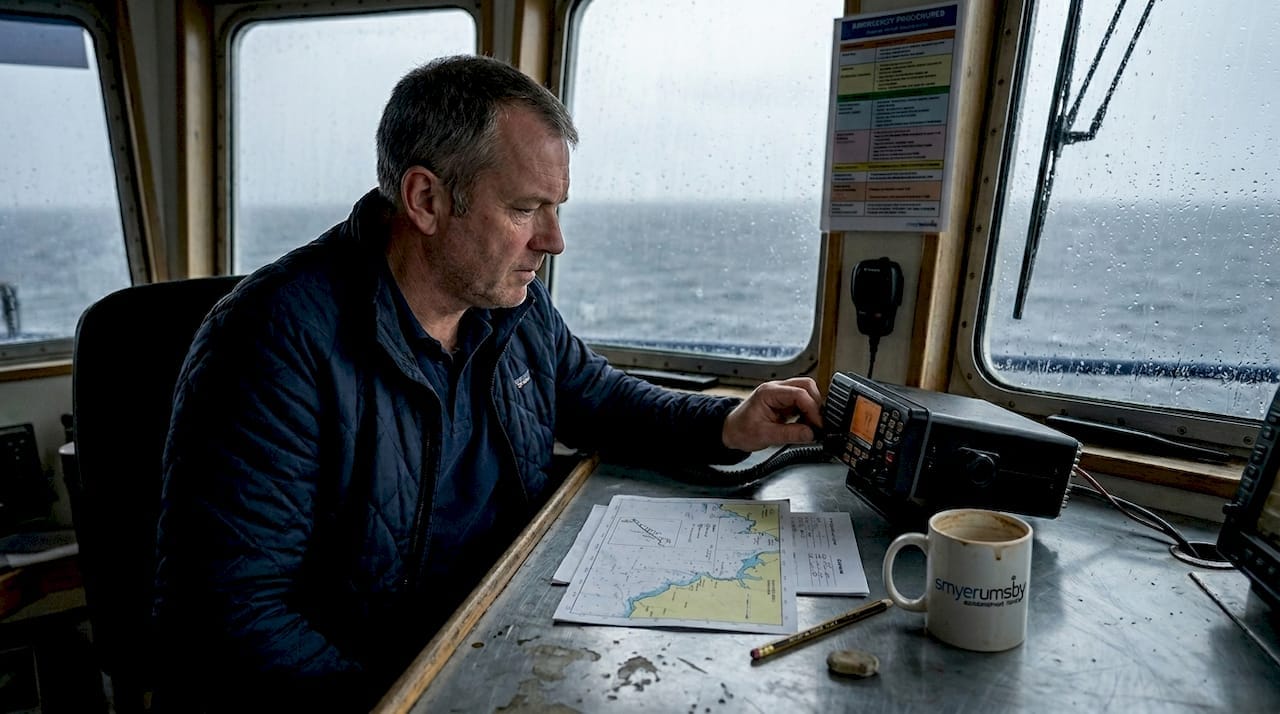
Many professionals assume that any two-way radio will do the job. In reality, VHF radio sits in a different category entirely, offering regulated frequencies, greater range, and the kind of operational reliability that mission-critical industries depend on. Whether you manage vessel communications, coordinate a construction site, or direct staff across a large event venue, understanding what VHF radio is and how it works is not optional. It is foundational. This guide covers the essentials: what VHF radio is, how it functions, where it is used, and how to select the right equipment for your specific operational requirements.
Table of Contents
- What is VHF radio?
- How VHF radio works: The fundamentals
- VHF radios in professional scenarios: Practical uses and safety
- Comparing VHF radios: Types, features and selection criteria
- Why investing in the right VHF radio pays off
- How to upgrade your communications with expert support
- Frequently asked questions
Key Takeaways
| Point | Details |
|---|---|
| VHF radio defined | VHF radios use Very High Frequency bands for critical, reliable two-way communication. |
| Professional applications | Marine, healthcare, construction, and events all depend on VHF radios for safety and coordination. |
| Device selection matters | Choosing the right type and power output ensures optimal coverage and regulatory compliance. |
| Ongoing support | Proper training and maintenance are vital for getting the most out of professional VHF systems. |
What is VHF radio?
VHF stands for Very High Frequency. It refers to the radio frequency band spanning 30 to 300 MHz, though most professional two-way VHF radios operate within the 136 to 174 MHz range for land-based use, and 156 to 174 MHz for marine applications. This frequency range gives VHF a distinct advantage over lower-frequency alternatives: it supports clearer audio transmission over meaningful distances, particularly in open environments.
VHF radios differ from standard consumer walkie-talkies in several important ways. They operate on regulated, licensed frequencies. They are built to meet specific industry standards for durability, waterproofing, and power output. They also integrate with safety systems, such as Digital Selective Calling (DSC) in marine environments, which allows automated distress signalling without manual voice transmission.
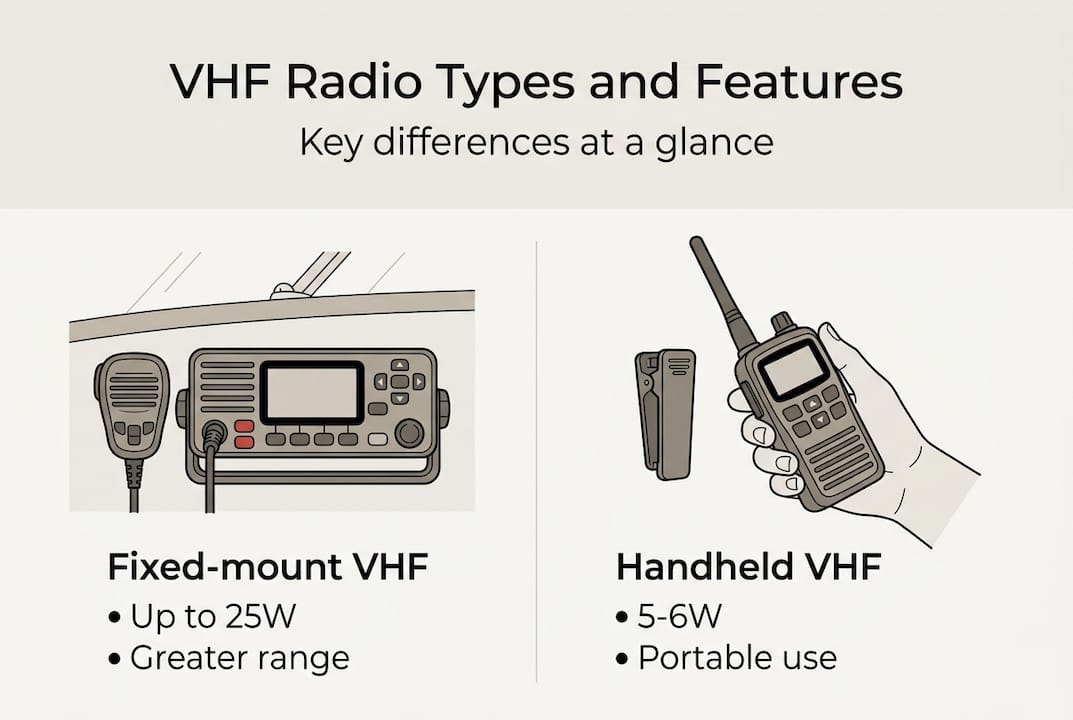
For decision-makers comparing radio communication options, the power output of a VHF radio is one of the most practical considerations. Fixed VHF units, typically installed on vessels or in control rooms, can transmit at up to 25W. Handheld units generally output between 5W and 6W. As noted in VHF marine radio testing, the power supply must sustain full operation without a voltage drop exceeding 10 to 15 per cent, as any greater drop will compromise transmission quality and safety.
VHF radio is considered essential across a wide range of professional sectors. These include:
- Marine: Vessel-to-vessel and vessel-to-shore communication, distress signalling, and port coordination
- Construction: Site-wide coordination between ground crews, crane operators, and site managers
- Healthcare: Emergency response coordination and inter-departmental communication in large facilities
- Event management: Crowd control, security coordination, and logistics across large venues
- Security: Perimeter monitoring, incident reporting, and rapid response communication
- Local government and utilities: Field team coordination during maintenance operations and emergencies
In each of these settings, the consequences of a failed or unclear transmission can be severe. VHF radio is not simply a convenience tool. It is a safety-critical asset.
How VHF radio works: The fundamentals
Understanding the mechanics of VHF radio helps professionals make better decisions about deployment and coverage planning. The core principle is straightforward: a transmitter converts audio into an electromagnetic signal, which travels through the air and is received by a compatible radio tuned to the same frequency.
Here is how the process works in practice:
- The user presses the push-to-talk (PTT) button, activating the transmitter and converting voice into a radio frequency signal.
- The signal travels outward in a line-of-sight path, meaning it moves most effectively when there are no significant physical obstructions between transmitter and receiver.
- The receiving radio picks up the signal, converts it back into audio, and delivers it to the listener in real time.
- The user releases the PTT button, returning the radio to receive mode and allowing others to transmit on the same channel.
- Repeaters can be used to extend coverage in complex environments such as tunnels, multi-storey buildings, or large industrial sites.
Line-of-sight transmission is both a strength and a limitation. In open water or flat terrain, VHF signals can travel considerable distances. In urban environments or areas with dense vegetation, coverage may be reduced. This is why understanding your operational environment is essential before selecting equipment.
“Reliable communication is not about having the most radios on site. It is about having the right radios, properly configured, in the right hands.”
For marine radio use cases, VHF is the internationally recognised standard. Channel 16 is the designated distress and calling frequency, monitored by coastguards and vessels worldwide. This global standardisation makes VHF indispensable for any maritime operation, from commercial shipping to leisure sailing and offshore construction.
Power output directly affects transmission range. Fixed marine radios outputting up to 25W provide extended range compared to handheld units at 5 to 6W, making them the preferred choice for offshore operations where distance and reliability are paramount.
VHF radios in professional scenarios: Practical uses and safety
The true value of VHF radio becomes clear when you examine how it performs under real operational pressure. Across industries, VHF radios are deployed not just for routine communication but as a primary tool for safety management and emergency response.
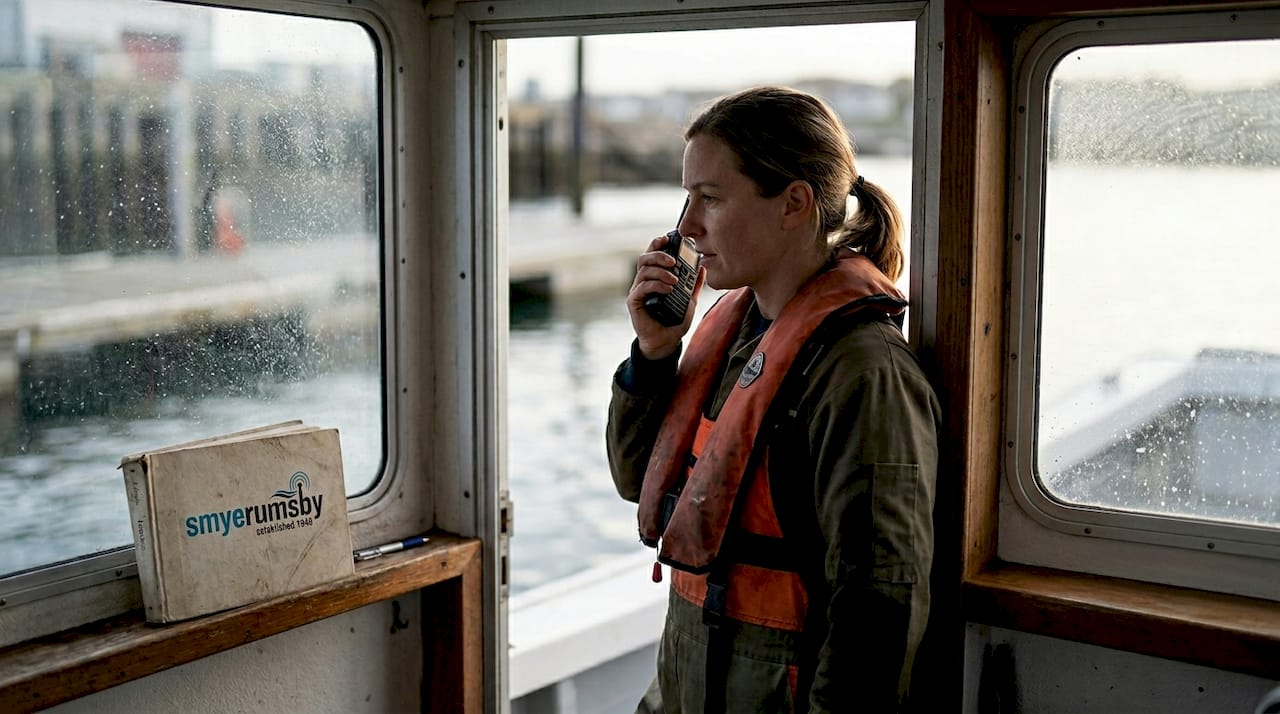
In the marine sector, VHF is a legal requirement for most commercial vessels operating in UK waters. Crew members must hold a Short Range Certificate (SRC) to operate marine VHF equipment, and vessels must monitor Channel 16 at all times when at sea. Beyond compliance, marine radio protocols are designed to ensure that distress calls are heard and acted upon without delay.
In construction, VHF radios support coordination between teams working across large or multi-level sites. A crane operator, a banksman, and a site manager may all need to communicate simultaneously across significant distances. Clarity and immediacy are non-negotiable in these situations.
For event management and healthcare, the radio use cases are equally compelling. A medical team at a large outdoor event must be able to respond to incidents quickly, with clear communication between first responders, security, and logistics staff. A hospital facilities team managing an emergency evacuation depends on instant, reliable contact across multiple floors and departments.
Key safety considerations for VHF radio deployment include:
- Channel discipline: Assign dedicated channels for specific teams or functions to prevent communication overlap
- Battery management: Ensure all units are fully charged before operations begin and carry spares for extended shifts
- Regular testing: Conduct radio checks at the start of each operational period
- Compliance: Ensure all operators hold the appropriate licence or certification for the frequencies used
Pro Tip: For operations spanning large outdoor areas, set handheld radios to maximum power output and position any repeaters at elevated points to maximise line-of-sight coverage. Always verify power supply stability before a critical operation, as voltage drops above 10 to 15 per cent will degrade transmission quality.
Comparing VHF radios: Types, features and selection criteria
Selecting the right VHF radio requires matching the device’s capabilities to your specific operational environment. The two primary categories are fixed-mount and handheld units, each with distinct advantages.
| Feature | Fixed-mount VHF | Handheld VHF |
|---|---|---|
| Power output | Up to 25W | 5 to 6W |
| Range | Up to 50 km (line of sight) | Up to 8 to 10 km (open terrain) |
| Portability | No, installed in vessel or control room | Yes, worn or carried by individual |
| Battery dependency | Powered by vessel or mains supply | Rechargeable battery pack |
| DSC capability | Standard on most models | Available on selected models |
| Best suited for | Marine, control rooms, fixed installations | Field teams, construction, events, healthcare |
| Durability rating | High, built-in housing | IP67 or IP68 rated models available |
When evaluating features, prioritise those that align with your industry’s regulatory requirements and operational demands. For marine applications, DSC capability is not optional; it is a legal requirement on many vessel types. For construction or event use, IP-rated waterproofing and drop resistance are essential.
For those considering advanced options, the Icom IC-M94DE is a strong example of a modern handheld marine VHF radio that integrates DSC and AIS functionality, providing real-time vessel tracking alongside voice communication.
Pro Tip: Always verify that your power supply can sustain the radio’s full output without significant voltage drop. As confirmed in marine radio testing standards, a drop exceeding 10 to 15 per cent will reduce both range and reliability, which is unacceptable in safety-critical environments.
Why investing in the right VHF radio pays off
There is a tendency among some organisations to treat radio equipment as a commodity purchase, selecting the cheapest option that appears to meet the specification. This approach carries real risk. In our experience working with clients across marine, construction, and event sectors since 1948, the cost of a communication failure almost always exceeds the cost of the equipment that would have prevented it.
A vessel that loses VHF contact in deteriorating weather, a construction site where a crane operator cannot hear a stop signal, or a medical team unable to coordinate during a crowd incident: these are not hypothetical scenarios. They are the situations that underscore why equipment quality, proper configuration, and ongoing maintenance are not areas to cut corners.
The organisations that invest in reliable equipment safety advice and quality hardware consistently report fewer operational disruptions and greater confidence from their teams. That confidence translates directly into safer, more effective operations. Choosing the right VHF radio is not a technical decision alone. It is a leadership decision.
How to upgrade your communications with expert support
Armed with this knowledge, the next step is ensuring your organisation has the right equipment, properly configured and supported. At Smye-Rumsby, we have been helping professionals across Kent and the South East select, install, and maintain critical communication systems for over 75 years. Whether you are looking to hire a two-way radio for a short-term project or invest in a permanent marine electronics solutions setup, our team provides tailored advice based on your specific operational environment. We work with leading manufacturers including Motorola, Kenwood, and Icom to help you choose the right system with confidence.
Frequently asked questions
What does VHF stand for?
VHF stands for Very High Frequency, referring to the radio frequency range between 30 and 300 MHz used across professional communication systems worldwide.
Is a VHF radio the same as a walkie-talkie?
No. While some consumer walkie-talkies use VHF frequencies, dedicated VHF radios are purpose-built for longer range, regulated frequencies, and safety-critical applications that standard walkie-talkies cannot reliably support.
What is the range of a VHF radio?
VHF radios typically cover up to 30 to 50 km in line-of-sight conditions, with fixed marine radios at 25W providing the greatest range for offshore and open-water operations.
Do I need a licence for a VHF radio?
Yes. Most professional and marine VHF radios in the UK require a radio licence and, for marine use, operators must hold a recognised qualification such as the Short Range Certificate.
Can VHF radios be used indoors?
VHF radios function indoors, but walls and structural obstacles can reduce signal range. Repeaters and careful antenna placement can significantly improve indoor coverage for large facilities.