
MARTYN'S LAW & BUSINESS PREPAREDNESS
Martyn’s Law – Is Your Business Ready?
What is Martyn’s Law?
Martyn’s Law, officially the Terrorism (Protection of Premises) Act 2025, introduces new duties for certain premises and events to improve preparedness and public safety.
For many organisations, this means reviewing how staff respond during an emergency, including evacuation, lockdown, communication and other protective procedures.
At Smye-Rumsby, we can help with the communications and monitoring side of that planning, from two-way radios and site coverage through to body-worn cameras and smart sensors.
Who Could Be Affected?
Martyn’s Law will apply to certain publicly accessible premises and events, depending on how many people could reasonably be expected to be present.
Premises with 200 to 799 people will generally fall within the standard tier.
Larger premises and qualifying events with 800 or more people may fall within the enhanced tier, with additional requirements.
This could include places such as:
- Schools and colleges
- Hotels
- Shopping centres
- Event venues
- Sports grounds
- Healthcare sites
- Places of worship
- Public buildings
- Visitor attractions
- Large commercial premises
The important point is that every site is different, so organisations need to understand which requirements apply to them and make sure their emergency procedures are suitable.
Smye-Rumsby can help review the communication and monitoring systems already in place and identify where improvements may be needed.
Why Communication Matters
In an emergency, clear communication can make a real difference.
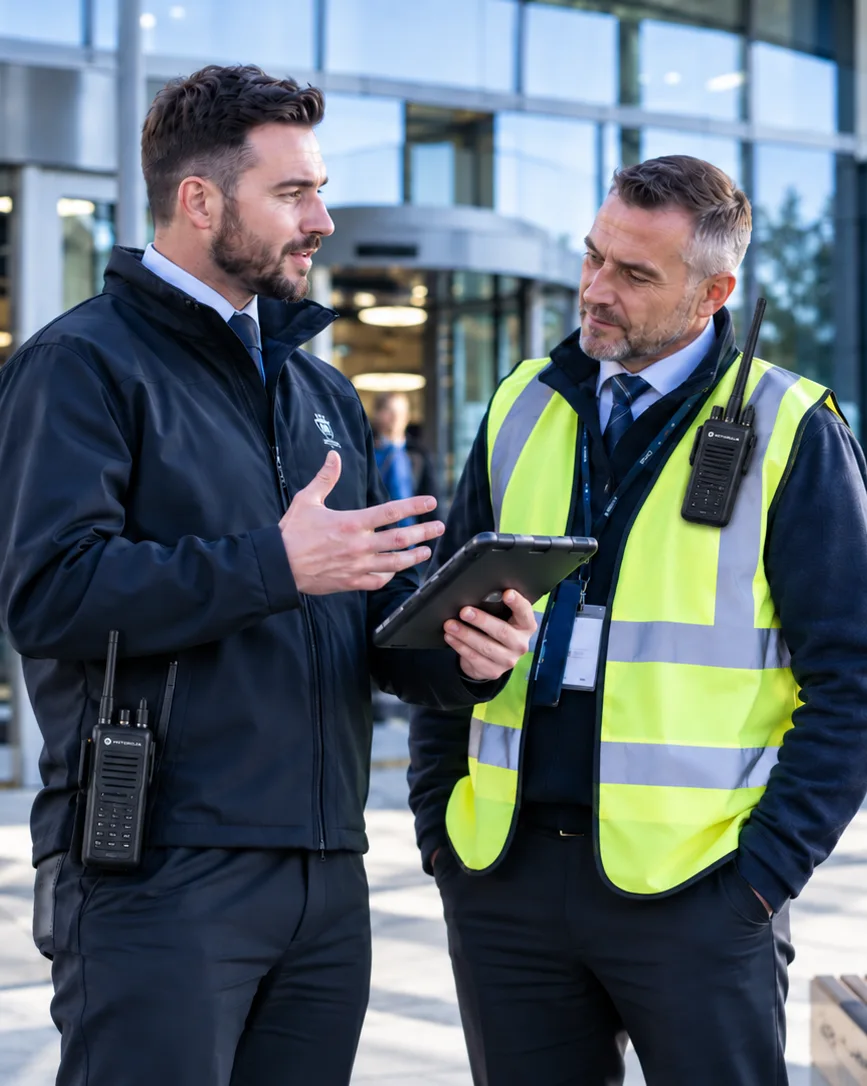
Teams may be spread across different buildings, floors, entrances or outdoor areas, and people need to know what is happening quickly.
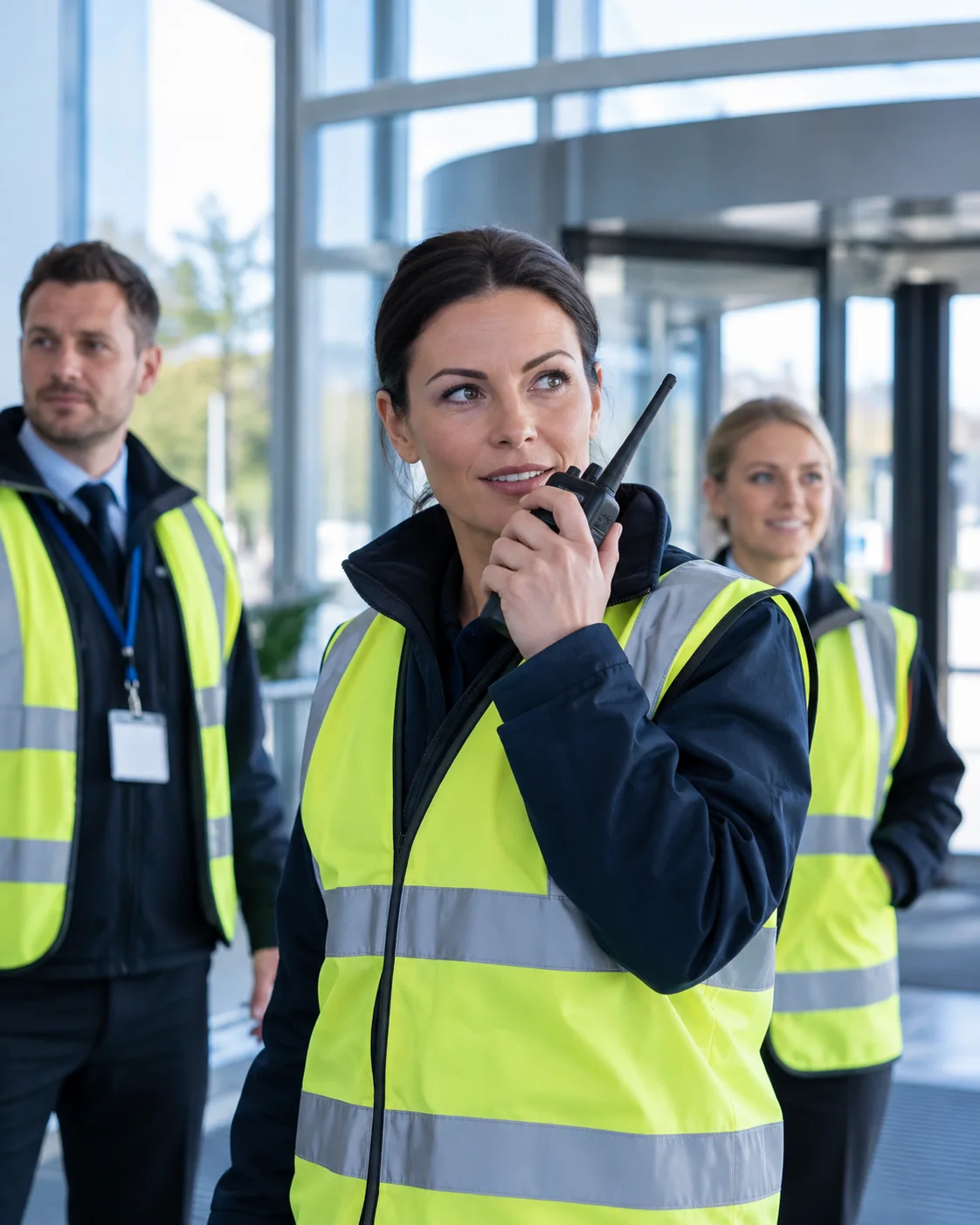
Two-way radios can help staff communicate instantly without relying on mobile phone signal or individual calls.
At Smye-Rumsby, we can help with:
- Two-way radio systems
- Radio coverage surveys
- Repeaters for larger or difficult sites
- Motorola WAVE PTX
- Body-worn cameras
- Smart sensors and monitoring
- Servicing and ongoing support
Good communication is only one part of emergency planning, but it can help staff respond quickly, stay informed and coordinate safely when it matters most.
How Smye-Rumsby Can Help
Preparing for Martyn’s Law is not about buying one piece of equipment and assuming the job is done. Your organisation needs suitable procedures, reliable communication and systems that support your staff when something happens.
Smye-Rumsby can review the communication and monitoring systems you already have. We can then identify areas where improvements may help.
Reliable Communication Across Your Site
For some organisations, the priority will be better radio coverage. Other sites may need communication between several buildings, outdoor areas or different locations.
Two-way radios allow staff to communicate instantly without making individual phone calls. They can also provide reliable communication in areas where mobile coverage is poor.
For larger premises, we can carry out radio coverage surveys. Where needed, repeater systems and additional infrastructure can improve coverage across difficult areas.
Wider Communication and Monitoring
Motorola WAVE PTX can connect teams over broadband and mobile networks. As a result, staff can communicate across much wider areas than a traditional radio system alone.
Body-worn cameras and smart monitoring can also support your wider safety strategy. These technologies can provide staff with additional information and help them respond more effectively to incidents.
Every site is different. Therefore, the right solution should reflect your premises, your staff and the way your organisation operates.
How Smye-Rumsby Can Help
Preparing for Martyn’s Law is not about buying one piece of equipment and assuming the job is done. Your organisation needs suitable procedures, reliable communication and systems that support your staff when something happens.
Smye-Rumsby can review the communication and monitoring systems you already have. We can then identify areas where improvements may help.
Reliable Communication Across Your Site
For some organisations, the priority will be better radio coverage. Other sites may need communication between several buildings, outdoor areas or different locations.
Two-way radios allow staff to communicate instantly without making individual phone calls. They can also provide reliable communication in areas where mobile coverage is poor.
For larger premises, we can carry out radio coverage surveys. We can also design repeater systems and other infrastructure to improve coverage across difficult areas.
Wider Communication and Monitoring
Motorola WAVE PTX can connect teams over broadband and mobile networks. As a result, staff can communicate across much wider areas than a traditional radio system alone.
Body-worn cameras and smart monitoring can also support your wider safety strategy. These technologies can provide staff with additional information and help them respond more effectively to incidents.
Every site is different. Therefore, the right solution should reflect your premises, your staff and the way your organisation operates.
Two-Way Radios & Martyn’s Law
Reliable communication can be critical when staff need to react quickly to an incident.
Teams may be spread across several floors, entrances, departments or outdoor areas. This is common in schools, hospitals, venues, shopping centres and public buildings.
Two-way radios give staff an immediate way to communicate at the press of a button. There is no need to make individual calls, wait for someone to answer or rely on mobile phone coverage.
For larger or more complex sites, Smye-Rumsby can design radio systems with repeaters and additional infrastructure to improve coverage across buildings, basements, outdoor areas and difficult locations.
We can also carry out radio coverage surveys to identify weak areas and help make sure your communication system is suitable for the way your organisation operates.
As part of your wider Martyn’s Law preparedness, reviewing how your staff communicate during an emergency is a sensible place to start.

Smart Sensors & Monitoring
Good emergency planning is not only about how staff communicate. It is also about understanding what is happening across your site and being alerted quickly when something needs attention.
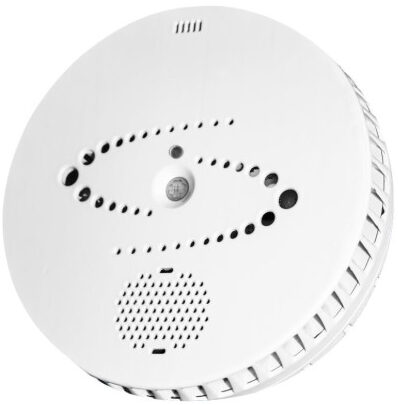
Smart sensors can help organisations monitor areas where cameras may not be appropriate. They can still provide useful alerts and environmental information.
Depending on the system used, this can include air quality, noise levels, aggression alerts, vaping and other events that may need a response.
For schools, healthcare, hospitality, public buildings and other busy environments, this type of monitoring can provide another layer of awareness alongside existing communication and safety procedures.
At Smye-Rumsby, we can help integrate smart sensor technology into a wider communication and safety setup, so alerts can be passed to the right people and acted on quickly.
The aim is not to replace existing procedures, but to give staff better information and help them respond more effectively when something happens.
Smart Sensors & Monitoring
Good emergency planning is not only about how staff communicate. It is also about understanding what is happening across your site and being alerted quickly when something needs attention.
Smart sensors can help organisations monitor areas where cameras may not be appropriate. They can still provide useful alerts and environmental information.
Depending on the system used, this can include air quality, noise levels, aggression alerts, vaping and other events that may need a response.
For schools, healthcare, hospitality, public buildings and other busy environments, this type of monitoring can provide another layer of awareness alongside existing communication and safety procedures.
At Smye-Rumsby, we can help integrate smart sensor technology into a wider communication and safety setup, so alerts can be passed to the right people and acted on quickly.
The aim is not to replace existing procedures, but to give staff better information and help them respond more effectively when something happens.
Body-Worn Cameras & Staff Safety
Body-worn cameras can provide another useful layer of protection for staff working in public-facing or higher-risk environments.
They can help record incidents, support staff during difficult situations and provide valuable evidence when something goes wrong. Just as importantly, the visible presence of a body-worn camera can sometimes help calm a situation before it escalates.
Body-worn video can work alongside two-way radios, smart sensors and existing security systems. Together, these systems can support staff and improve incident awareness.
Smye-Rumsby can help with the supply, setup and support of body-worn camera systems for a wide range of workplaces and public environments.

Site Surveys, Coverage & System Planning
A communication system is only useful if it works where your staff actually need it.
Large buildings, basements, plant rooms, outdoor areas and multiple-site environments can all create radio coverage challenges. As part of reviewing your emergency procedures, it is worth checking that your existing system provides reliable communication across the whole site.
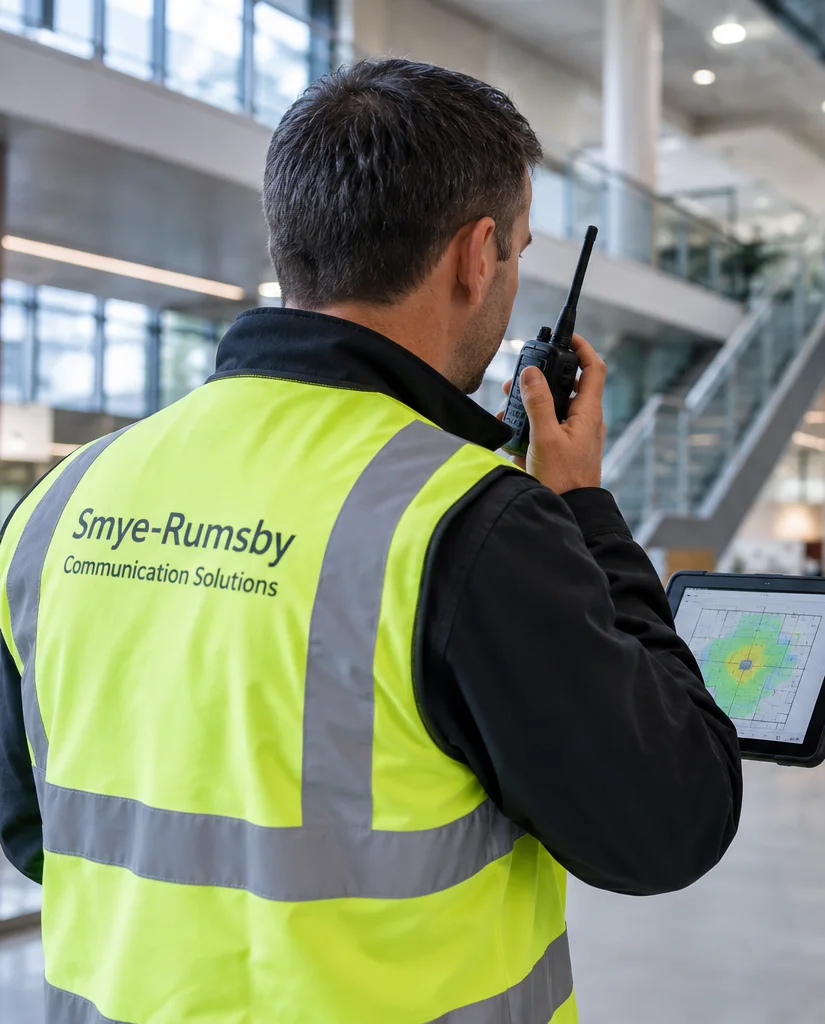
Smye-Rumsby can carry out radio coverage surveys to identify weak areas, dead spots and locations where additional infrastructure may be needed.
Where required, we can design and install repeaters and distributed antenna systems. These can improve radio coverage across complex sites.
We can also review existing radio systems and advise on upgrades, programming and future expansion, making sure the solution fits the way your organisation actually operates.