

Many boaters assume their mobile phones provide adequate communication at sea. This assumption puts lives at risk. Mobile phones lack coverage beyond coastal areas and cannot interface with maritime rescue services the way dedicated marine radios do. Understanding and implementing proper marine radio protocols is essential for legal compliance, effective emergency response, and safe navigation in UK waters. This guide provides the practical knowledge you need.
Table of Contents
- Understanding Marine Radio Systems And Legal Requirements
- Key Marine Radio Communication Protocols For Safety And Efficiency
- Using Marine Radio To Prevent Collisions And Improve Situational Awareness
- Maintenance And Practical Tips For Reliable Marine Radio Use
- Explore Expert Marine Radio Equipment And Support From Smye-Rumsby
- Frequently Asked Questions
Key takeaways
| Point | Details |
|---|---|
| VHF marine radios require proper licensing | Both a Ship Radio Licence for equipment and an operator’s Short Range Certificate (SRC) are legally required in the UK. |
| Channel 16 is exclusively for emergencies | This international distress frequency must remain clear for coastguard communications and genuine emergency calls. |
| Proper protocols prevent collisions | Clear radio communication of vessel intentions significantly reduces collision risks through early coordination. |
| Regular maintenance prevents failures | Routine equipment checks, especially for stuck buttons and antenna condition, ensure reliable communication when needed. |
| Antenna positioning maximises range | Mounting antennas as high as possible extends VHF range to 20-40 miles in typical UK coastal conditions. |
Understanding marine radio systems and legal requirements
VHF radio remains the primary communication technology for vessels operating in UK waters. VHF communications are sufficient for boating around the UK coastline, categorised as Sea Area A1. These radios operate on specific maritime frequencies that coastguards, harbours, and other vessels monitor continuously.
The UK VHF marine radio licensing system requires both equipment and operator licences. Your vessel needs a Ship Radio Licence for the equipment itself. You personally need a Short Range Certificate demonstrating competency in radio operation. The good news? The SRC is a lifetime qualification that never expires once obtained.
VHF radio range typically extends 20 to 40 miles depending on several factors. Installation height matters enormously. Weather conditions affect signal propagation. Whether you use a fixed or handheld unit makes a significant difference. Fixed installations with properly positioned antennas deliver maximum range, whilst handheld units offer portability but reduced power and lower antenna height.
Two main types serve different needs:
- Fixed VHF radios: Permanently installed with external antennas, providing maximum power (25 watts) and range for serious offshore work
- Handheld VHF radios: Portable backup units typically offering 5 watts, ideal for tender operations or emergency situations if the main radio fails
- DSC-enabled radios: Digital Selective Calling allows automated distress alerts linked to your vessel’s unique Maritime Mobile Service Identity number
Choosing appropriate marine electronics depends on your typical operating area. Coastal day sailors might manage with quality handheld units as primary equipment, though fixed installations remain preferable. Offshore passages absolutely require fixed VHF with DSC capability. Understanding UK licensing requirements ensures you operate legally whilst maintaining access to critical safety communications.
Key marine radio communication protocols for safety and efficiency
Channel 16 is the universal emergency channel, monitored continuously by coastguards and vessels worldwide. You must keep this channel clear except for genuine emergencies or initial contact with coastguard stations. Never conduct routine conversations on Channel 16. Contact other vessels here briefly, then immediately switch to an agreed working channel.
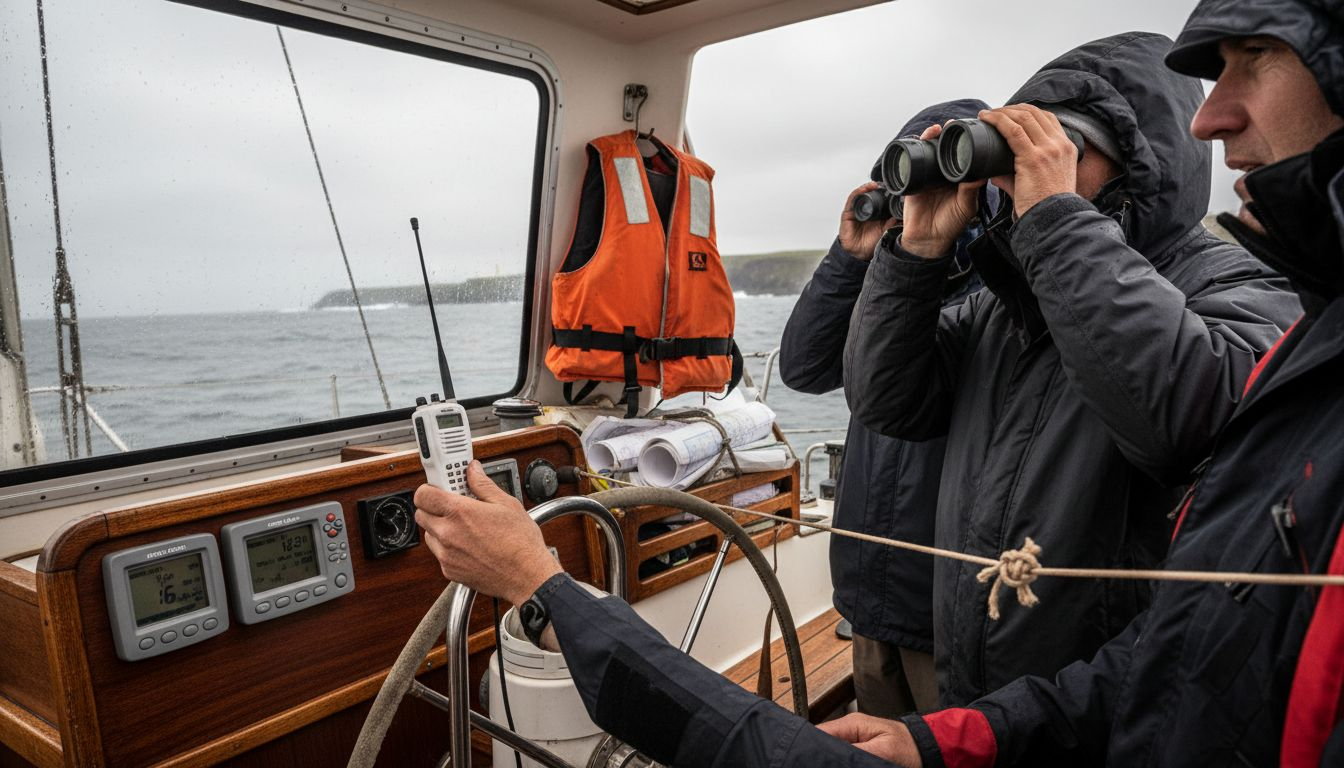
Emergency calls follow strict hierarchies. A mayday call is only for grave and imminent danger; misuse can lead to prosecution and wastes resources during genuine emergencies. Pan-pan calls indicate urgent situations requiring assistance but not immediate danger to life. Securite broadcasts warn of navigation hazards or weather information affecting safety.
Proper mayday format:
- “Mayday, Mayday, Mayday”
- “This is [vessel name] three times”
- “Mayday [vessel name]”
- Position, nature of distress, assistance required, persons on board
- “Over”
Radio etiquette maintains system effectiveness for everyone. Listen before transmitting to avoid interrupting ongoing communications. Keep transmissions brief and relevant. Identify your vessel clearly at the start of every transmission. Speak slowly and distinctly, especially when communicating position information or vessel names.
Good radio etiquette is critical to avoid blocking emergency calls and maintaining maritime safety standards. Unfortunately, emergency channel blockage from stuck transmit buttons or careless operation creates dangerous situations. An open microphone preventing emergency traffic can cost lives.
Pro tip: Always monitor Channel 16 usage as your default listening channel, but conduct actual conversations on working channels like 6, 8, or 72. This keeps the emergency frequency available whilst allowing you to communicate effectively. Brief your crew on basic radio procedures before departing so anyone aboard can call for help if needed.
Using marine radio to prevent collisions and improve situational awareness
VHF radio use can assist in resolving collision situations earlier than visual signals alone. A recent incident demonstrated this perfectly. Two vessels on converging courses used timely VHF communication to clarify intentions and coordinate safe passing. Without radio contact, confusion about right of way could have resulted in collision or dangerous last-minute manoeuvres.
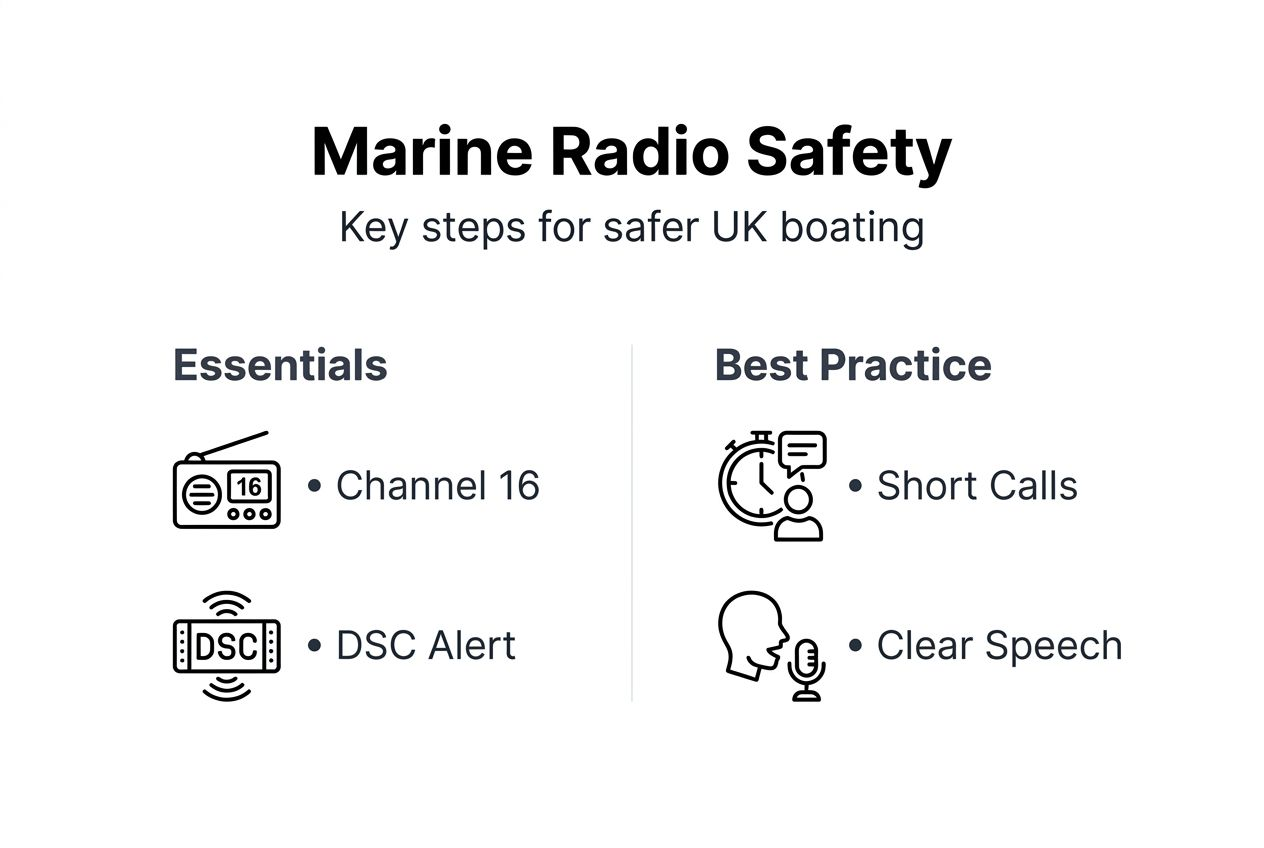
Effective collision avoidance via radio requires understanding maritime rules of the road. Give-way vessels must take early, substantial action to pass at safe distance. Stand-on vessels maintain course and speed, making their movements predictable. Radio communication supplements these rules but never replaces proper lookout and early action.
Best practices for using VHF radio in collision avoidance:
- Identify the other vessel clearly using position, heading, and description before attempting radio contact
- Call on Channel 16 briefly, then switch to a working channel immediately for detailed discussion
- State your vessel name, position, course, and speed clearly
- Describe your intended action explicitly rather than assuming the other vessel will guess
- Confirm the other vessel understands and agrees with the planned manoeuvre
- Execute the agreed action decisively and monitor the situation until vessels are well clear
Timely communication makes the difference. Contact other vessels early when you first identify a potential close quarters situation. Waiting until the last moment reduces options and increases stress. Clear, calm radio dialogue allows both vessels to coordinate effectively.
“Early radio communication combined with decisive action according to collision regulations provides the safest resolution when vessel paths converge. Never hesitate to clarify intentions when doubt exists about another vessel’s movements.”
Review relevant collision avoidance case studies to understand how professional mariners handle these situations. Learning from real incidents improves your own decision making and communication skills when faced with similar scenarios at sea.
Maintenance and practical tips for reliable marine radio use
Regular equipment maintenance prevents communication failures at critical moments. The RNLI recommends regular checks of VHF radios to ensure they function correctly and avoid accidental open microphone transmissions. A stuck transmit button can block emergency channels for extended periods, potentially preventing genuine distress calls from being heard.
Inspect your radio before every voyage:
- Check transmit and receive functions with a radio check to a local station or another vessel
- Ensure no buttons stick or remain depressed after use
- Verify the microphone cable shows no damage or loose connections
- Confirm battery charge or electrical connections are sound
- Test that you can hear transmissions clearly through speakers or headsets
Antenna condition dramatically affects performance. To maximise communication range the antenna must be positioned as high as possible. Inspect antenna cables for corrosion or damage where they connect to the radio and antenna base. Replace cables showing any deterioration immediately. Check antenna mounting remains secure and vertical.
Practical operational tips enhance reliability. Install a cockpit loudspeaker if your radio sits below decks, allowing you to hear transmissions whilst helming. Keep a fully charged handheld VHF as backup in case your main radio fails. Store the handheld in a waterproof case where everyone aboard knows its location.
Pro tip: Conduct regular practice drills with your crew covering basic radio procedures and emergency calls. Familiarity with equipment location, operation, and correct phraseology means anyone aboard can summon help effectively if you become incapacitated. Schedule these drills at the start of each season and whenever new crew join.
Professional radio equipment maintenance services identify potential problems before they cause failures. Annual inspection by qualified technicians ensures your radio meets regulatory standards and operates at peak performance. Radio repair services address any issues promptly, minimising downtime and maintaining your safety communications capability.
Explore expert marine radio equipment and support from Smye-Rumsby
Equipping your vessel with reliable marine communication systems requires expert guidance and quality products. Smye-Rumsby brings decades of experience in marine electronics, helping boat owners across the South East select, install, and maintain professional-grade VHF radios that meet UK regulatory requirements.
Advanced models like the ICOM IC-M94DE VHF marine radio integrate DSC and AIS functionality, providing enhanced safety features that automatically broadcast distress alerts with your position. Professional installation ensures optimal antenna placement and system configuration for maximum range and reliability. Ongoing radio repair services keep your equipment functioning perfectly, preventing communication failures when you need help most. Partner with specialists who understand maritime communication requirements and deliver solutions that enhance safety and regulatory compliance.
Frequently asked questions
What is the legal requirement for marine radio operation in the UK?
You need two separate licences to operate a marine VHF radio legally in UK waters. Your vessel requires a Ship Radio Licence covering the equipment itself. You personally need a Short Range Certificate proving competency in radio operation procedures, emergency protocols, and relevant regulations.
How far can typical VHF marine radios communicate around the UK coast?
VHF marine radios typically achieve 20 to 40 miles of range depending on antenna height, installation quality, and environmental conditions. Fixed installations with properly positioned external antennas deliver maximum range, whilst handheld units usually manage 5 to 10 miles due to lower power output and antenna height.
What should I avoid doing on channel 16 to keep emergency channels clear?
Channel 16 is the international distress frequency used exclusively for emergencies and brief initial contact. Never conduct routine conversations, social chatter, or extended communications on this channel. Always switch to a working channel immediately after establishing initial contact. Check your microphone regularly to prevent stuck buttons, causing open transmission that blocks emergency traffic.
How often should I check and maintain my marine radio?
Inspect your VHF radio before every voyage, checking transmit and receive functions, button operation, and connections. Conduct more thorough maintenance quarterly, examining antenna cables, connections, and mounting hardware for corrosion or damage. Schedule annual professional inspection to ensure regulatory compliance and identify potential issues before they cause failures.
Can a handheld VHF radio be sufficient for coastal boating?
Handheld VHF radios can serve as primary equipment for small vessels operating close to shore in fair weather, though fixed installations remain preferable for safety. Always carry a handheld as backup, even if you have a fixed radio. Ensure any handheld unit includes DSC capability and register it with a Maritime Mobile Service Identity number for emergency functionality. Consider your typical operating area and conditions when deciding whether a handheld provides adequate capability.