

Many boaters assume their mobile phones provide adequate communication at sea, but this misconception can prove dangerous when signals vanish beyond coastal waters. Marine radios deliver dedicated, weatherproof communication that functions reliably where mobile networks fail, offering direct access to emergency services and nearby vessels. Understanding why marine radios remain essential in 2026 helps you make informed decisions about safety equipment that could save lives when conditions deteriorate or emergencies arise unexpectedly.
Table of Contents
- Understanding The Role Of Marine Radios In Safety And Communication
- Comparing Marine Radios With Mobile Phones: Coverage, Durability And Functionality
- Essential Features And Legal Requirements Of Marine Radios In The UK
- Maintaining And Optimising Marine Radio Use For Professional And Recreational Users
- Get Expert Marine Radio Solutions With Smye-Rumsby
- Frequently Asked Questions About Marine Radios
Key takeaways
| Point | Details |
|---|---|
| Reliability at sea | Marine radios provide consistent communication beyond mobile phone coverage areas |
| Emergency response | Direct distress signalling connects instantly with HM Coastguard and rescue services |
| Weather monitoring | Continuous access to marine forecasts and warnings keeps you informed of changing conditions |
| Durability advantage | Purpose-built waterproof design withstands saltwater, impacts and extreme weather |
Understanding the role of marine radios in safety and communication
Mobile phones lose signal rapidly once you venture beyond coastal areas, leaving you isolated when emergencies strike. Marine radios operate on dedicated VHF frequencies specifically designed for maritime communication, ensuring your messages reach intended recipients regardless of distance from shore. This fundamental difference transforms how you interact with other vessels, harbour authorities and emergency services.
Digital Selective Calling functionality allows you to transmit distress alerts automatically, broadcasting your vessel’s position and nature of emergency to all nearby craft and rescue coordination centres simultaneously. Kent Search & Rescue teams rely on these signals to locate vessels in distress quickly, reducing response times dramatically compared to mobile phone calls that require manual position reporting. When seconds matter, automated distress calls eliminate human error and communication delays.
Weather updates transmitted via dedicated marine channels provide real-time information about approaching storms, fog banks and sea state changes that directly affect your safety. These broadcasts occur at scheduled intervals throughout the day, allowing you to plan routes and make harbour decisions based on authoritative meteorological data. You receive warnings about deteriorating conditions before they arrive, giving you time to seek shelter or adjust your voyage.
Direct communication with nearby vessels improves coordination during navigation through busy channels, fishing operations and emergency situations requiring assistance. Calling another boat on VHF channel 16 produces immediate responses, whilst mobile phones require knowing specific numbers and hoping the other party answers. This instant connectivity proves invaluable when avoiding collisions, requesting tows or coordinating search patterns for persons overboard.
Pro Tip: Programme frequently used channels into your marine radio’s memory for instant access to harbour masters, marinas and local working channels without scrolling through all frequencies.
Marine radio communication follows established protocols that ensure clarity and efficiency, reducing misunderstandings that could escalate minor situations into serious incidents requiring rescue intervention.
Comparing marine radios with mobile phones: coverage, durability and functionality
VHF marine radios transmit signals that travel along the water’s surface and through atmospheric conditions that block mobile phone signals completely. Coverage extends to the radio horizon, typically 20 to 30 nautical miles depending on antenna height, maintaining connectivity throughout coastal waters where mobile networks become unreliable beyond three miles offshore. This extended range ensures you remain in contact with shore stations and other vessels throughout your voyage.
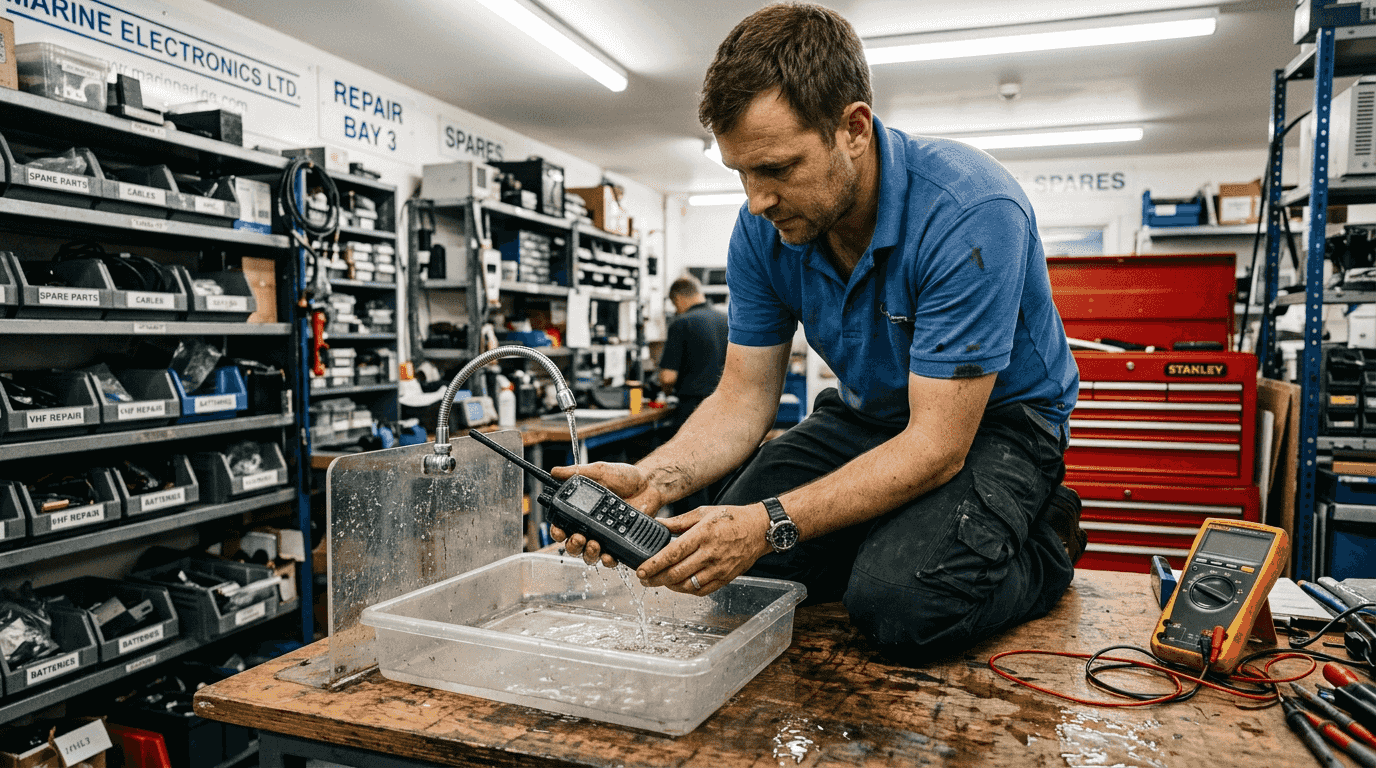
Marine radios undergo rigorous waterproof testing to achieve IP67 or IP68 ratings, meaning they survive complete submersion and continue functioning after saltwater exposure. Mobile phones, despite water resistance claims, deteriorate rapidly in marine environments where constant spray, humidity and salt corrosion destroy internal components. A dropped marine radio floats and continues transmitting; a dropped phone sinks and stops working immediately.
Digital Selective Calling represents the most significant functional advantage marine radios offer over mobile devices. Pressing the distress button transmits your vessel’s unique identifier, GPS coordinates and emergency type to all stations monitoring channel 70, creating an automatic distress relay that mobile phones cannot replicate. Rescue services receive precise location data without requiring you to speak, crucial when injuries prevent verbal communication.
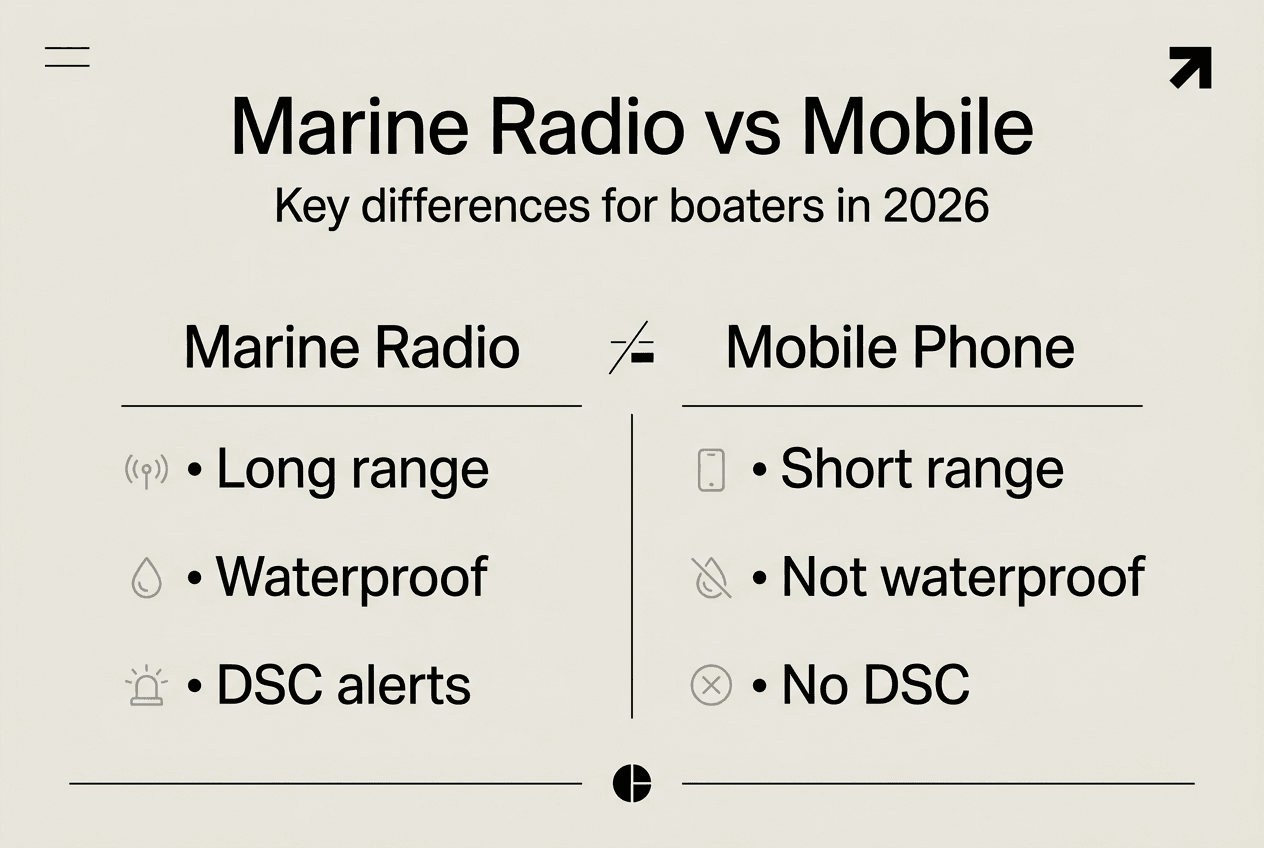
| Feature | Marine Radio | Mobile Phone |
|---|---|---|
| Coverage range | 20-30 nautical miles | 3-5 miles offshore |
| Waterproof rating | IP67/IP68 certified | Water resistant only |
| Emergency function | DSC distress button | Manual dialling required |
| Battery life | 8-12 hours continuous | 4-6 hours with signal searching |
| Weather updates | Dedicated channels | App dependent on data |
| Saltwater resistance | Corrosion-proof design | Vulnerable to salt damage |
Battery performance differs substantially between technologies, with marine radios maintaining charge throughout extended voyages whilst mobile phones drain rapidly searching for non-existent networks. Modern marine radios include power-saving modes that extend operation beyond 12 hours, ensuring communication remains available during overnight passages or prolonged emergencies. Mobile phones become useless paperweights once batteries expire, offering no backup communication capability.
Exploring two-way radio products reveals the specialised engineering that makes marine radios superior communication tools for waterborne environments, with features specifically designed for maritime challenges that mobile phones never encounter during typical use.
Essential features and legal requirements of marine radios in the UK
Digital Selective Calling integration allows modern marine radios to function as automated emergency beacons, transmitting distress alerts that include your vessel’s Maritime Mobile Service Identity number and GPS position. This nine-digit identifier registers with Ofcom and links to your vessel details, enabling rescue services to access information about your boat’s size, capabilities and typical operating areas before arriving on scene. Registration takes minutes but provides crucial intelligence that improves rescue outcomes.
Automatic Identification System connectivity displays nearby vessel positions, courses and speeds on compatible marine radio displays, enhancing situational awareness in congested waters or reduced visibility conditions. AIS transponders broadcast your position to other equipped vessels, reducing collision risks by making your presence known to commercial traffic that might not spot smaller recreational craft visually. This technology transforms navigation from guesswork into informed decision-making based on real-time traffic data.
Weather channel availability ensures continuous access to marine forecasts, gale warnings and navigational safety information broadcast by HM Coastguard throughout UK waters. Channel 16 serves as the international distress and calling frequency, whilst channels 67, 73 and others provide regional working frequencies for harbour operations and vessel traffic services. Understanding which channels serve specific purposes prevents communication confusion during critical moments.
UK legislation mandates that certain vessels carry marine radios to maintain safety standards, particularly commercial craft carrying passengers or operating beyond sheltered waters. Whilst recreational vessels under 13.7 metres face no absolute legal requirement, prudent seamanship demands reliable communication equipment regardless of regulatory obligations. Insurance policies often specify marine radio carriage as a condition of coverage, making compliance both legally sensible and financially necessary.
Selecting appropriate marine radio equipment involves evaluating your typical operating area, vessel size and communication needs:
- Determine whether you require handheld portability or fixed installation with higher transmit power for extended range
- Verify the radio includes DSC functionality and GPS integration for automated distress capability
- Confirm waterproof ratings meet IP67 standards minimum for reliable performance in spray and rain
- Check battery life specifications ensure adequate operation duration for your longest typical voyages
- Ensure the radio operates on international marine VHF frequencies if you plan foreign cruising
Pro Tip: Register your marine radio’s MMSI number with Ofcom immediately after purchase and update registration details whenever you change vessels or contact information to ensure rescue services access current data during emergencies.
Maintaining and optimising marine radio use for professional and recreational users
Battery health determines whether your marine radio functions when needed most, making regular inspection and testing essential maintenance tasks. Rechargeable batteries lose capacity over time, particularly when stored in discharged states or exposed to temperature extremes common in marine environments. Testing battery performance monthly under realistic conditions reveals degradation before it causes communication failures during emergencies.
Waterproof seal integrity requires periodic inspection, especially around battery compartments, antenna connections and accessory ports where repeated opening compromises gasket effectiveness. Salt crystals accumulate in seal grooves, preventing proper closure and allowing moisture ingress that corrodes internal electronics. Rinsing seals with fresh water after each voyage and applying silicone grease annually maintains waterproof protection throughout the radio’s service life.
Channel programming simplifies communication by storing frequently used frequencies in memory positions accessible through single button presses. Pre-setting channel 16 for distress monitoring, local harbour working channels and weather broadcast frequencies eliminates fumbling through menus during stressful situations requiring immediate communication. Most marine radios allow naming stored channels, making identification intuitive even for crew members unfamiliar with frequency numbers.
Antenna positioning significantly affects transmission range and reception quality, with higher mounting locations providing better line-of-sight propagation across water surfaces. Fixed installations benefit from permanent mast-mounted antennas that maximise range, whilst handheld units require keeping the antenna vertical and away from your body during transmission. Testing signal strength at various locations aboard your vessel identifies optimal positions for reliable communication.
Pro Tip: Conduct radio checks with harbour control or nearby vessels before departing on every voyage to verify your equipment transmits and receives properly, establishing communication capability before emergencies arise offshore.
- Inspect battery contacts for corrosion and clean with electrical contact cleaner every three months
- Store handheld radios in protective cases when not in use to prevent impact damage and moisture exposure
- Update radio firmware when manufacturers release new versions to maintain compatibility with evolving marine communication standards
- Practise proper radio etiquette including stating your vessel name, listening before transmitting and keeping messages concise
Regular maintenance services from qualified technicians ensure your marine radio meets performance specifications and complies with regulatory requirements, identifying potential failures before they compromise safety during critical moments at sea.
Get expert marine radio solutions with Smye-Rumsby
Navigating the complexities of marine communication equipment selection, installation and maintenance becomes straightforward when you partner with specialists who understand maritime operational requirements. Smye-Rumsby brings decades of experience supplying professional-grade marine radios to commercial operators and recreational boaters throughout the South East, ensuring you receive equipment matched precisely to your vessel’s needs and operating environment.
Choosing between hiring or purchasing marine radios depends on your usage patterns, with rental options providing cost-effective solutions for seasonal boaters or special events requiring temporary communication enhancement. Permanent installations benefit from customised integration with navigation systems, offering seamless operation that enhances safety without cluttering helm stations with multiple independent devices.
Comprehensive marine electronics solutions extend beyond basic radio equipment to include AIS transponders, GPS integration and weather monitoring systems that transform your vessel’s communication capabilities. Professional installation services ensure optimal antenna placement, proper grounding and reliable power connections that maximise performance and longevity, eliminating guesswork from equipment setup.
Frequently asked questions about marine radios
What is the best marine radio for small recreational boats?
Handheld VHF radios with DSC capability and GPS integration provide optimal solutions for boats under eight metres, offering portability and adequate transmit power for coastal operations. Models featuring floating designs and high-visibility colours prevent loss overboard whilst ensuring visibility if dropped. Battery life exceeding eight hours supports day trips without recharging concerns.
Are marine radios mandatory for UK recreational vessels?
UK law does not mandate marine radios for recreational craft under 13.7 metres operating in coastal waters, though carrying one demonstrates prudent seamanship. Commercial vessels and those venturing offshore face specific carriage requirements under Maritime and Coastguard Agency regulations. Insurance policies frequently require marine radios regardless of legal obligations, making them practically essential.
How often should I test and maintain my marine radio?
Conduct radio checks before every voyage to verify transmission and reception functionality, with comprehensive maintenance inspections every six months. Annual professional servicing ensures compliance with regulatory standards and identifies component wear before failures occur. Battery replacement typically becomes necessary every two to three years depending on usage patterns and charging practices.
Can marine radios be used outside UK waters?
Marine VHF radios operate on internationally standardised frequencies, functioning throughout European waters and globally with identical channel assignments. Your MMSI registration remains valid internationally, though notifying relevant authorities when cruising foreign waters ensures rescue services access current information. Some countries require temporary radio licences for visiting vessels, making advance research essential.
What are the differences between VHF and UHF marine radios?
VHF frequencies provide superior propagation over water surfaces and serve as the international maritime communication standard, making them mandatory for marine use. UHF radios lack marine-specific features like DSC distress capability and weather channels, operating instead on frequencies designed for land-based applications. Choosing VHF ensures compatibility with rescue services, harbour authorities and other vessels worldwide.