
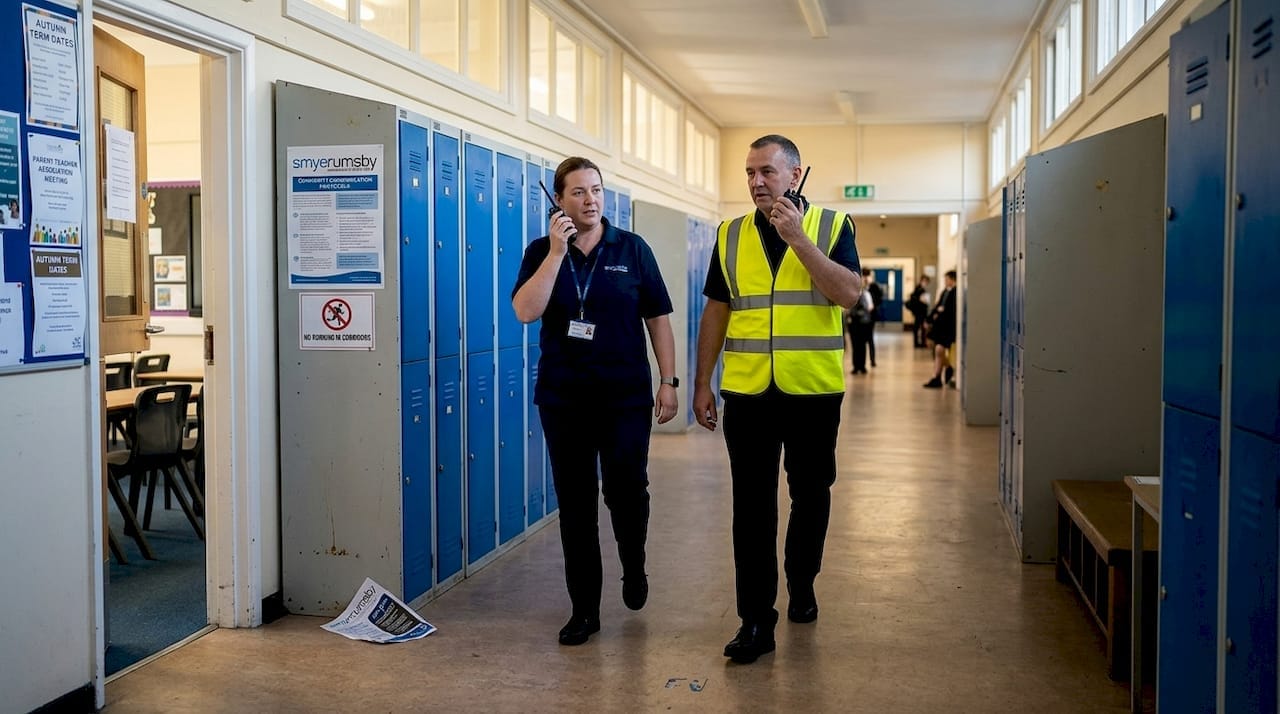
Enhance school safety with radio communication
- Two-way radios offer instant, reliable communication unaffected by network issues.
- Digital radios provide clearer audio and better coverage for large or complex school sites.
- Regular staff training and proper protocols maximize radios’ effectiveness in daily school operations.
Many school administrators assume that mobile phones are enough to manage communication across a busy school site. In practice, mobile networks can fail under pressure, group messaging is slow, and reaching multiple staff members at once is rarely straightforward. Two-way radios solve these problems directly, offering instant, reliable communication that works regardless of signal coverage. This article explains how schools can adopt radio systems to improve both safety and day-to-day efficiency, covering everything from choosing the right technology to training staff and building sustainable communication protocols.
Table of Contents
- Understanding the unique role of radio communication in schools
- Comparing analogue and digital radios for school use
- Implementing radio communication: Setting protocols, training, and maintenance
- Beyond emergencies: Everyday benefits of radios for school operations
- What most schools miss: The hidden value of consistent radio use
- Explore professional radio solutions for schools
- Frequently asked questions
Key Takeaways
| Point | Details |
|---|---|
| Radios boost school safety | Quick, group communication makes emergency response more efficient. |
| Digital radios outperform analogue | Clearer audio and longer range mean fewer missed messages and disruptions. |
| Training prevents misuse | Proper protocols and staff instruction unlock consistent, reliable communication. |
| Daily benefits extend beyond emergencies | Radio use streamlines logistics and improves staff collaboration for everyday tasks. |
| Expert help is available | Schools can access tailored advice and solutions for radio adoption and operation. |
Understanding the unique role of radio communication in schools
Two-way radios occupy a distinct and important place within school communication frameworks. Unlike mobile phones, they do not depend on commercial network coverage, meaning they remain fully operational even during outages or in areas of the school site where signal is poor. For large secondary schools, sprawling campuses, or multi-building sites, this reliability is not a convenience but a necessity.
The speed of radio communication is another critical advantage. A staff member can broadcast to an entire team with a single button press, reaching playground supervisors, office staff, and site managers simultaneously. Mobile phones simply cannot replicate this in urgent situations. As noted in The Ultimate Guide to Two-Way Radios for Schools, radios provide quick, reliable communication for staff, especially during emergencies.
Common scenarios where radios prove invaluable include:
- Playground supervision: Staff can alert colleagues to incidents without leaving their post or searching for a phone signal.
- Medical emergencies: A swift radio call ensures the first aider and office are notified within seconds.
- Fire drills and evacuations: Coordinating large groups of pupils requires clear, simultaneous communication across the site.
- Daily logistics: From unlocking gates to coordinating deliveries, radios keep operations running smoothly.
- Visitor management: Reception staff can quickly verify and communicate visitor arrivals to relevant departments.
“Effective school communication is not just about responding to crises. It is about creating an environment where staff feel connected, supported, and able to act quickly whenever a situation demands it.”
For schools looking to identify the best school radios for their specific environment, it is worth considering the size of the site, the number of staff, and the typical communication demands across a school day. Reviewing practical communication steps can also help administrators move from general interest to a structured implementation plan.
Comparing analogue and digital radios for school use
Once a school commits to radio communication, the next decision is choosing between analogue and digital technology. Both have their place, but understanding the differences helps school leaders invest wisely.
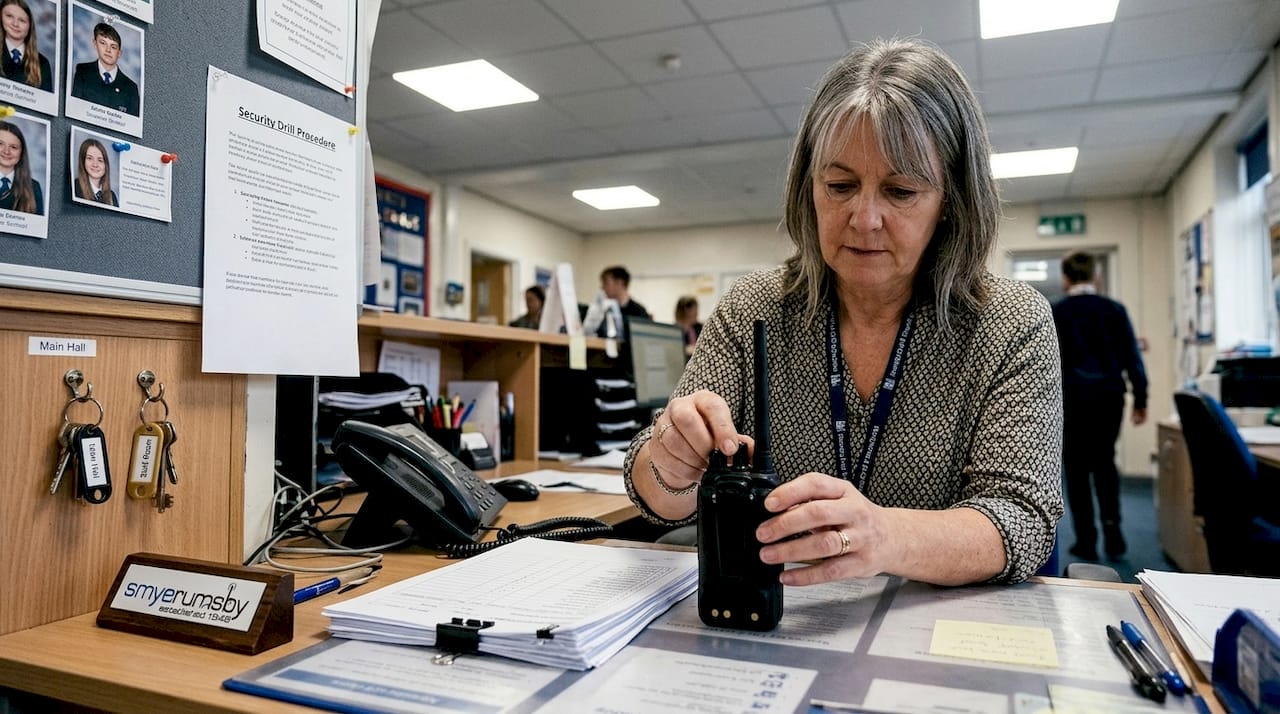
Analogue radios are cheaper but prone to interference, while digital radios offer clearer audio and better range. This distinction matters considerably in a school environment, where background noise, thick walls, and large outdoor spaces all affect signal quality.
| Feature | Analogue radios | Digital radios |
|---|---|---|
| Cost | Lower upfront cost | Higher initial investment |
| Audio clarity | Can degrade with distance | Consistently clear |
| Range | Shorter, affected by obstacles | Greater, more reliable |
| Interference | More susceptible | Significantly reduced |
| Battery life | Standard | Often longer lasting |
| Encryption | Limited | Available for sensitive comms |
For smaller primary schools with compact sites and modest budgets, analogue radios may serve adequately. However, for larger schools with complex layouts or higher safety requirements, digital mobile radio technology is the recommended choice. Digital systems maintain audio quality even at the edge of their range, which is critical when a member of staff is at the far end of a playing field during an incident.
Schools upgrading from older systems should also consider future-proofing. Analogue infrastructure is gradually being phased out across many professional sectors, and investing in digital now avoids the cost of a second upgrade in a few years. Reviewing radio upgrade advice from experienced providers can help administrators understand the full cost-benefit picture before committing.
Pro Tip: Always arrange an onsite test before purchasing or hiring radios. Walk the full perimeter of the school, test in corridors, basements, and sports halls, and confirm coverage meets your operational needs before signing any agreement.
Implementing radio communication: Setting protocols, training, and maintenance
Choosing the right radios is only the first step. Effective implementation depends on clear protocols, thorough staff training, and a consistent maintenance routine. Without these, even the best equipment will underperform.
As confirmed by protocols and training guidance for schools, these elements are necessary for effective radio communication. Here is a practical sequence for getting started:
- Assign dedicated channels: Separate channels for different teams (e.g., site management, pastoral staff, office) prevent congestion and confusion.
- Create an emergency procedure: Define exactly what staff should say and do when reporting an incident via radio, including a clear escalation process.
- Establish routine communication norms: Agree on acceptable use during the school day to avoid unnecessary chatter on shared channels.
- Conduct regular drills: Practise emergency scenarios termly so staff respond confidently under pressure.
- Appoint a radio coordinator: Designate a member of staff to oversee equipment, manage charging, and log any faults.
| Maintenance task | Recommended frequency |
|---|---|
| Battery charge check | Daily (morning) |
| Full equipment inspection | Monthly |
| Firmware or software update | As advised by supplier |
| Range and audio test | Each term |
| Replacement review | Annually |
For schools uncertain about long-term commitment, radio hire services offer a flexible route to trial equipment before purchasing. This is particularly useful for schools planning events or managing temporary increases in staff numbers. Lessons from event radio selection also apply well to school open days, sports days, and other large-scale activities.
Pro Tip: Build a battery check into the morning register routine. Assign a specific member of staff to confirm all radios are charged and functional before the school day begins. This simple habit prevents avoidable communication failures.
Beyond emergencies: Everyday benefits of radios for school operations
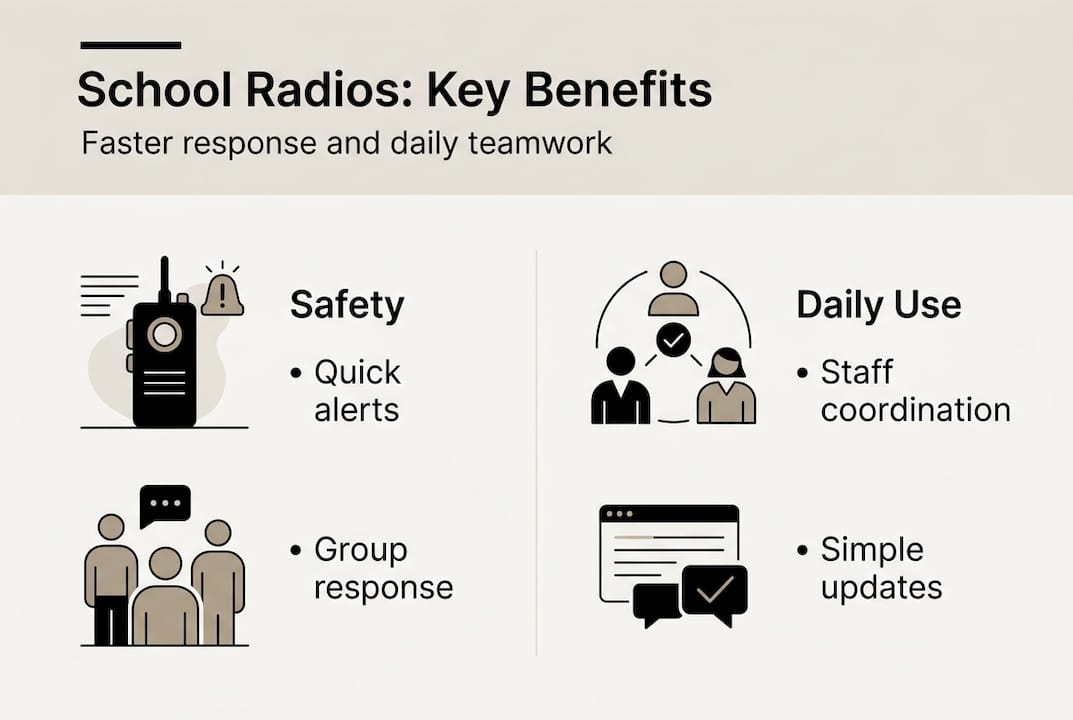
It is easy to think of two-way radios as emergency tools, but their value extends far beyond crisis response. Radios are useful not only in emergencies but also for daily coordination and management, and this is where schools often discover the greatest return on their investment.
Consider the practical gains across a typical school day:
- Lunch duty coordination: Supervisors can quickly alert kitchen staff to pupil numbers or flag a behavioural concern without disrupting the dining hall.
- Assembly management: Staff can confirm pupil groups are ready and in position before an assembly begins, avoiding delays.
- Site and facilities management: The site manager can coordinate contractors, manage access, and respond to maintenance issues in real time.
- Safeguarding support: Pastoral staff can communicate discreetly about a pupil’s welfare without drawing attention, protecting both the child and the process.
- Trip preparation: Radios help coordinate departure logistics and keep staff connected during off-site activities where mobile coverage may be unreliable.
“When staff can communicate instantly and discreetly, they spend less time searching for colleagues and more time focused on pupils. That shift in dynamic has a measurable impact on both safety and the quality of the school environment.”
For schools exploring the full range of school radio benefits, it is worth reviewing how other institutions have structured their systems. Practical communication solutions drawn from real school environments offer a useful benchmark. Even analogue radio uses in basic coordination roles demonstrate how radio technology consistently outperforms alternatives when reliability and speed are priorities.
The cumulative effect of consistent radio use is a more cohesive staff team. When communication flows freely and reliably, staff feel better supported, response times improve, and the school operates with greater confidence at every level.
What most schools miss: The hidden value of consistent radio use
Most schools that adopt radios do so reactively, typically after an incident highlights a communication gap. This is understandable, but it means many institutions never fully realise what consistent, proactive radio use can do for school culture.
The real value is not in the emergency call. It is in the dozens of small interactions throughout the day that build a more connected, accountable staff team. A quick radio check-in between a form tutor and a pastoral lead. A site manager confirming a gate is secured before home time. These moments seem minor, but they accumulate into a culture of attentiveness and shared responsibility.
We have observed that schools which integrate radios into everyday routines, rather than reserving them for crises, report stronger staff morale and faster problem resolution. The radio becomes a symbol of a well-organised team. Reviewing a radio upgrade perspective from institutions that have made this shift reveals a consistent pattern: the operational benefits arrive quickly, but the cultural shift takes a term or two to fully embed. That is worth planning for.
Explore professional radio solutions for schools
If you are ready to improve communication and safety across your school, Smye-Rumsby offers tailored radio solutions designed for educational environments. Whether you are weighing up the merits of radio hire vs purchase or looking to invest in a full digital radio products system, our team can guide you through the options. We work with schools across the South East to assess site requirements, recommend appropriate equipment, and provide ongoing support. For a structured approach to improving your school’s communication infrastructure, explore our school radio consultancy resources and get in touch to discuss your specific needs.
Frequently asked questions
Are analogue radios still suitable for smaller schools?
Yes, analogue radios can be cost-effective for small, low-interference environments, but digital radios offer clearer audio and greater reliability for most school settings.
How do schools ensure staff use radios correctly?
Schools should provide regular training sessions and establish clear communication protocols, as protocols and training are essential for maximising radio effectiveness across all staff roles.
Can radios be used for both safety and day-to-day tasks?
Absolutely. Radios improve school safety and streamline daily operations, from lunch duty coordination to site management and safeguarding support.
What is the typical range of a school radio?
School radios generally cover an entire campus, but digital models provide more reliable range and consistently clearer audio than analogue options, particularly across large or complex sites.